Introduction
James Stewart was one of the most respected and beloved actors in Hollywood history. Famous for his distinctive voice, natural acting style, and portrayal of honest, ordinary people facing extraordinary circumstances, Stewart became a defining figure of American cinema. Known affectionately as Jimmy Stewart, he starred in numerous classic films, including *It’s a Wonderful Life*, *Mr. Smith Goes to Washington*, *Rear Window*, *Vertigo*, and *The Philadelphia Story*.
Beyond his achievements as an actor, Stewart served as a military pilot during World War II and later became a brigadier general in the United States Air Force Reserve. His remarkable life combined artistic success, military service, and a reputation for personal integrity.
Although James Stewart died in 1997, his movies continue to reach new generations of viewers. As of 2026, his performances remain an important part of Hollywood’s cinematic heritage.
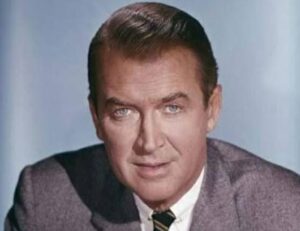
James Stewart Biography: Quick Facts
– **Full Name:** James Maitland Stewart
– **Popular Name:** Jimmy Stewart
– **Date of Birth:** May 20, 1908
– **Birthplace:** Indiana, Pennsylvania, United States
– **Nationality:** American
– **Profession:** Actor, military officer, and former pilot
– **Education:** Princeton University
– **Years Active:** 1932–1991
– **Famous For:** *It’s a Wonderful Life*, *Rear Window*, *Vertigo*, and *Mr. Smith Goes to Washington*
– **Spouse:** Gloria Hatrick McLean
– **Children:** Two adopted sons and twin daughters
– **Military Rank:** Brigadier General, United States Air Force Reserve
– **Major Award:** Academy Award for Best Actor for *The Philadelphia Story*
– **Date of Death:** July 2, 1997
– **Age at Death:** 89 years
Early Life and Family Background
James Maitland Stewart was born on May 20, 1908, in Indiana, Pennsylvania. He grew up in a family that valued hard work, discipline, and responsibility. His father, Alexander Maitland Stewart, operated a hardware store, while his mother, Elizabeth Ruth Jackson Stewart, supported the family and encouraged her children’s interests.
As a child, Stewart was interested in music, drawing, and model airplanes. He also developed an appreciation for performance and storytelling. Although he did not initially plan to become a major Hollywood star, his interests eventually led him toward acting.
Stewart’s upbringing helped shape the sincere, approachable personality that audiences would later recognize in his film performances. His ability to portray everyday people with warmth and vulnerability became one of the most distinctive characteristics of his acting career.
Education and Early Interest in Acting
Stewart attended Princeton University in New Jersey, where he studied architecture and graduated in 1932. During his college years, he became involved in theatrical activities and discovered a growing passion for performing.
After graduation, he joined the University Players, a summer theater company in Massachusetts. This experience introduced him to professional stage acting and helped him develop his performance skills.
During this period, Stewart formed a lifelong friendship with fellow actor Henry Fonda. Their shared experiences in theater helped establish the foundation for their future careers in entertainment.
Stewart’s early stage work eventually opened the door to Broadway and Hollywood. Although architecture had been his original academic direction, acting became his professional calling.
James Stewart’s Hollywood Career
Early Film Career: 1930s
James Stewart began building his Hollywood career during the 1930s. After working in theater, he moved into films and appeared in supporting roles while developing his screen presence.
His early movies included *The Murder Man* (1935), which featured Spencer Tracy, and *After the Thin Man* (1936). These projects helped Stewart gain experience and establish connections within the film industry.
A major turning point came when he worked with director Frank Capra. Stewart appeared in *You Can’t Take It with You* (1938), an ensemble comedy that won the Academy Award for Best Picture.
In 1939, Stewart delivered a memorable performance as an idealistic young senator in *Mr. Smith Goes to Washington*. The film explored political integrity, public responsibility, and the challenges faced by someone trying to do the right thing.
His performance earned him his first Academy Award nomination for Best Actor and established him as one of Hollywood’s leading performers.
Breakthrough and Academy Award Success
In 1940, Stewart starred alongside Katharine Hepburn and Cary Grant in *The Philadelphia Story*. His portrayal of reporter Macaulay Connor demonstrated his ability to balance humor, intelligence, and emotional complexity.
For this performance, Stewart won the Academy Award for Best Actor. The award confirmed his position among Hollywood’s most accomplished actors.
During this period, he also appeared in *Destry Rides Again* (1939), opposite Marlene Dietrich. His work across comedy, drama, and Western films demonstrated his versatility.
Rather than relying on a single screen persona, Stewart developed the ability to make different characters believable through understated expressions, natural dialogue, and emotional sincerity.
Military Service During World War II
One of the most remarkable aspects of James Stewart’s life was his service in the United States military.
Stewart had developed a strong interest in aviation before entering the armed forces and earned his civilian pilot’s license. In 1941, he joined the Army Air Corps, despite already enjoying considerable success in Hollywood.
He trained as a military pilot and instructor before serving overseas during World War II. He eventually became a B-24 bomber operations officer and flew 20 combat missions over Europe.
Stewart received several military decorations for his service, including the Distinguished Flying Cross and the Air Medal. His wartime responsibilities demonstrated a commitment to service that extended beyond his acting career.
After the war, Stewart returned to Hollywood but continued his military involvement through the Air Force Reserve. He was promoted to brigadier general in 1959 and retired from military service in 1968.
His military record remains an important part of his legacy, distinguishing him from many other major Hollywood stars of his generation.
Return to Hollywood and *It’s a Wonderful Life*
Following World War II, Stewart returned to the screen in a new phase of his career. One of his most famous performances came in Frank Capra’s *It’s a Wonderful Life* (1946).
In the film, Stewart played George Bailey, a small-town businessman who becomes overwhelmed by personal and financial difficulties. With the help of an angel named Clarence, George discovers how deeply his life has affected the people around him.
Although the film did not initially achieve the commercial success later associated with it, television broadcasts and repeated screenings helped transform it into a beloved Christmas classic.
Stewart’s portrayal of George Bailey remains one of his most celebrated performances. The character’s emotional struggles, compassion, and renewed appreciation for life have helped the movie remain relevant across generations.
The film also demonstrated Stewart’s ability to portray complicated emotions without losing the natural, relatable quality that made him such a popular actor.
Major Movies That Defined His Career
James Stewart appeared in a wide range of films, including romantic comedies, Westerns, suspense thrillers, and historical dramas.
Harvey* (1950)
In *Harvey*, Stewart played Elwood P. Dowd, a friendly man whose closest companion is an invisible, six-foot-tall rabbit. The comedy showcased Stewart’s gentle humor and ability to make an unusual character both entertaining and sympathetic.
*Winchester ’73* (1950)
This Western marked an important development in Stewart’s screen image. His role demonstrated a tougher side of his acting and helped establish his successful collaboration with director Anthony Mann.
*The Greatest Show on Earth* (1952)
Stewart appeared in Cecil B. DeMille’s circus drama, taking on a mysterious role that differed from many of his familiar screen characters.
*The Glenn Miller Story* (1954)
Stewart portrayed celebrated bandleader Glenn Miller in this musical biographical drama. The film explored Miller’s musical career, personal life, and contribution to American popular music.
*Rear Window* (1954)
Directed by Alfred Hitchcock, *Rear Window* featured Stewart as L. B. Jefferies, a photographer confined to a wheelchair who begins suspecting that a neighbor has committed murder.
The film is widely admired for its suspense, visual storytelling, and exploration of curiosity and observation. Stewart’s performance was central to its success.
*The Man Who Knew Too Much* (1956)
In this Hitchcock thriller, Stewart played an American doctor whose family becomes entangled in an international assassination plot. The role required him to portray an ordinary man confronting extraordinary danger.
*Vertigo* (1958)
In *Vertigo*, Stewart played John Ferguson, a former detective who develops an intense fascination with a mysterious woman. His performance explored obsession, fear, and psychological vulnerability.
The movie is now widely regarded as one of the most important films in cinema history.
*Anatomy of a Murder* (1959)
Stewart portrayed Paul Biegler, a small-town defense attorney handling a complicated murder case. The courtroom drama earned him another Academy Award nomination for Best Actor and demonstrated his ability to handle morally complex material.
*The Man Who Shot Liberty Valance* (1962)
This John Ford Western starred Stewart alongside John Wayne. The film examined the relationship between law, violence, reputation, and the myths that shape the American West.
*The Shootist* (1976)
Stewart appeared alongside John Wayne in this Western, which became one of Wayne’s final films. Although Stewart’s role was relatively brief, his participation connected two major figures in classic American cinema.
Collaboration With Alfred Hitchcock
James Stewart’s partnership with director Alfred Hitchcock produced several enduring classics.
Their best-known collaborations include *Rope* (1948), *Rear Window* (1954), *The Man Who Knew Too Much* (1956), and *Vertigo* (1958).
Hitchcock used Stewart’s familiar, trustworthy screen persona to create suspense. Instead of portraying a traditional action hero, Stewart often played ordinary men facing confusing and frightening situations.
This contrast made his characters compelling. Audiences could identify with their doubts, fears, and mistakes while following increasingly disturbing mysteries.
The collaboration also revealed a darker side of Stewart’s acting, particularly in *Vertigo*, where his character’s emotional instability challenges the reassuring image associated with many of his earlier roles.
James Stewart’s Acting Style
James Stewart became famous for an acting style that felt natural rather than theatrical. His distinctive voice, hesitant speech patterns, expressive face, and carefully controlled body language made his performances recognizable.
He often portrayed characters who were fundamentally decent but not necessarily fearless or perfect. They could be uncertain, stubborn, emotionally vulnerable, or overwhelmed by difficult circumstances.
These qualities allowed him to move comfortably between comedy and drama. Whether he was playing an idealistic senator, a struggling businessman, a skeptical detective, or a Western hero, Stewart brought a recognizable sense of humanity to his roles.
His performances also influenced how later generations understood the American leading man. Strength, in his films, did not always mean physical dominance; it could also mean moral courage, empathy, and the willingness to accept responsibility.
Awards and Achievements
James Stewart earned major recognition for his contributions to American film.
His most notable honors include:
– **Academy Award for Best Actor:** Won for *The Philadelphia Story* in 1941, recognizing his 1940 performance.
– **Academy Award nomination:** Best Actor for *Mr. Smith Goes to Washington*.
– **Academy Award nomination:** Best Actor for *It’s a Wonderful Life*.
– **Academy Award nomination:** Best Actor for *Harvey*.
– **Academy Award nomination:** Best Actor for *Anatomy of a Murder*.
– **Academy Honorary Award:** Presented in 1985 for his memorable performances and high ideals on and off the screen.
– **AFI Life Achievement Award:** Received in 1980.
– **Presidential Medal of Freedom:** Awarded in 1985.
– **Military decorations:** Included the Distinguished Flying Cross, Air Medal with oak leaf clusters, and French Croix de Guerre.
His honors recognized both his artistic achievements and his service to his country.
Personal Life, Marriage, and Children
James Stewart married Gloria Hatrick McLean in 1949. Their marriage lasted until her death in 1994.
Stewart became a stepfather to Gloria’s two sons from her previous marriage, Ronald and Michael. The couple later welcomed twin daughters, Judy and Kelly, in 1951.
Although he was one of Hollywood’s most recognizable stars, Stewart generally maintained a private family life. He preferred spending time away from the spotlight when his professional commitments allowed.
His long marriage and devotion to his family formed an important part of his personal story. He was also known for his close friendships, including his lifelong relationship with Henry Fonda.
Stewart’s public reputation was shaped not only by his movies but also by his modest demeanor and enduring association with traditional values.
James Stewart’s Later Career
During the later decades of his career, Stewart continued working in films and television. While he appeared less frequently than during his peak years, he remained a respected presence in the entertainment industry.
His later projects included Westerns, family films, television productions, and voice work.
In 1971, he starred in *The Jimmy Stewart Show*, a television sitcom in which he played a college professor. He later appeared in the television mystery series *Hawkins*, further demonstrating his willingness to explore different formats.
One of his final film appearances came in *An American Tail: Fievel Goes West* (1991), in which he provided the voice of Wylie Burp.
As his career progressed, Stewart became increasingly recognized as a living connection to Hollywood’s classic era. His performances continued to attract audiences who appreciated both his early comedies and his later dramatic work.
James Stewart’s Death
James Stewart died on July 2, 1997, in Beverly Hills, California, at the age of 89. His death marked the passing of one of the most influential actors of Hollywood’s golden age.
Following his death, tributes highlighted his remarkable film career, military service, and reputation for integrity. His contributions to cinema had already earned him numerous honors, and his legacy has continued through film restorations, television broadcasts, retrospectives, and academic study.
His hometown of Indiana, Pennsylvania, also preserves his memory through the James Stewart Museum, which celebrates his life and achievements.
Although Stewart is no longer alive, his performances continue to reach audiences around the world.
James Stewart’s Legacy in 2026
As of 2026, James Stewart remains an important figure in the history of American entertainment. His films continue to be studied for their storytelling, acting, direction, and cultural significance.
*It’s a Wonderful Life* remains particularly associated with the Christmas season, while *Rear Window* and *Vertigo* continue to attract critical attention for their cinematic techniques and psychological depth.
His legacy also extends beyond acting. Stewart’s military service during World War II and his later career in the Air Force Reserve demonstrate a side of his life that was separate from his Hollywood fame.
His ability to portray flawed but compassionate characters helped establish a lasting model for screen acting. Rather than relying on exaggerated gestures or larger-than-life heroics, he made ordinary people feel extraordinary through sincerity and emotional detail.
For film lovers discovering classic Hollywood in 2026, James Stewart’s work remains a valuable introduction to an era that helped shape modern cinema.
Frequently Asked Questions About James Stewart
Who was James Stewart?
James Stewart was an American actor and military officer best known for his roles in *It’s a Wonderful Life*, *Mr. Smith Goes to Washington*, *Rear Window*, and *Vertigo*.
When was James Stewart born?
He was born on May 20, 1908, in Indiana, Pennsylvania, United States.
How old was James Stewart when he died?
James Stewart was 89 years old when he died on July 2, 1997.
What was James Stewart’s most famous movie?
*It’s a Wonderful Life* is among his most widely recognized films. Other major classics include *Vertigo*, *Rear Window*, and *Mr. Smith Goes to Washington*.
Did James Stewart win an Oscar?
Yes. He won the Academy Award for Best Actor for *The Philadelphia Story*. He also received an Academy Honorary Award in recognition of his career and personal ideals.
Did James Stewart serve in World War II?
Yes. He served in the United States Army Air Forces during World War II, flew 20 combat missions, and later became a brigadier general in the Air Force Reserve.
Who was James Stewart’s wife?
His wife was Gloria Hatrick McLean. They married in 1949 and remained together until her death in 1994.
What is James Stewart remembered for in 2026?
He is remembered for his classic movies, distinctive acting style, military service, and lasting influence on American cinema.
Conclusion
James Stewart built a remarkable career by bringing honesty, warmth, and emotional depth to some of Hollywood’s most memorable characters. From the idealistic senator in *Mr. Smith Goes to Washington* to the troubled businessman in *It’s a Wonderful Life*, he demonstrated that powerful performances could come from portraying ordinary people with extraordinary sincerity.
His service during World War II, achievements in the Air Force Reserve, and long-standing commitment to his craft made his life exceptional beyond the movie screen.
More than two decades after his death, Stewart’s influence remains visible in the continuing popularity of his films. His legacy is a reminder that great acting is not simply about fame or awards; it is also about creating characters and stories that continue to matter to people across generations.
Discover the inspiring lives, remarkable careers, achievements, and personal journeys of more iconic stars. Read Full Biography