Some footballers are remembered for their trophies. Others are remembered for their goals. But a rare few leave behind something much bigger: a style of playing that changes how people see the game. Ronaldo Nazário belongs to that special group.
Known around the world as **Ronaldo Fenômeno**, the Brazilian striker combined breathtaking speed, extraordinary dribbling, powerful finishing, and remarkable composure in front of goal. At his peak, defenders struggled to predict what he would do next. He could accelerate past opponents, change direction in an instant, and finish with either foot.
His journey, however, was far from easy. From a modest childhood in Rio de Janeiro to the biggest stadiums in Europe, Ronaldo experienced incredible success, painful injuries, public pressure and one of the most memorable comebacks in football history.
He won the FIFA World Cup with Brazil, collected two Ballon d’Or awards and became a global football icon. Yet his story is not simply about winning. It is also about determination, resilience, and the ability to return when many people believe the best days are over.
This is the complete story of Ronaldo Nazário—from his early life and rise to fame to his greatest achievements, personal life, and activities beyond professional football.
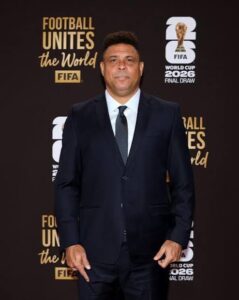
Ronaldo Nazário – Quick Facts
| Category | Details |
|—|—|
| Full Name | Ronaldo Luís Nazário de Lima |
| Popular Name | Ronaldo Nazário |
| Nickname | O Fenômeno (The Phenomenon) |
| Date of Birth | September 22, 1976 |
| Age in 2026 | 50 Years |
| Birthplace | Rio de Janeiro, Brazil |
| Nationality | Brazilian |
| Profession | Former Professional Footballer, Businessman |
| Playing Position | Striker |
| Height | Approximately 1.83 m |
| National Team | Brazil |
| FIFA World Cup Titles | 1994, 2002 |
| Ballon d’Or Awards | 1997, 2002 |
| FIFA World Cup Goals | 15 |
| Former Clubs | Cruzeiro, PSV, Barcelona, Inter Milan, Real Madrid, AC Milan, Corinthians |
| Retirement | February 2011 |
Early Life: Where Ronaldo’s Football Dream Began
Ronaldo Luís Nazário de Lima was born on September 22, 1976, in Rio de Janeiro, Brazil. He grew up in a modest family, where life was not always easy. Like many children in Brazil, football quickly became more than a pastime for him. It was the game he loved, the place where he felt free and the dream he wanted to pursue.
As a young boy, Ronaldo spent countless hours playing football in the streets and neighbourhoods of Rio. He did not need an expensive training ground or perfect equipment to enjoy the game. A ball, a little space and his imagination were enough.
Even at an early age, he showed qualities that made him different from other children. His acceleration was impressive, his balance was exceptional and he seemed to understand how to move around defenders naturally. He could take on several opponents without losing control of the ball.
Ronaldo’s family eventually recognised that his talent could become something serious. He began developing his skills through organised football, and his progress attracted attention.
His early journey was not built on overnight success. It came through practice, determination and a deep love for the game. Those childhood experiences helped shape the fearless attacking style that would later make him famous around the world.
The First Big Opportunity: Ronaldo’s Rise at Cruzeiro
Ronaldo’s professional journey began with Cruzeiro, one of Brazil’s major football clubs. He joined the senior side in 1993, and it did not take long for people to notice his extraordinary potential.
While many young players need several seasons to adapt to professional football, Ronaldo made an immediate impression. He played with confidence, attacked defenders directly and showed a natural instinct for scoring goals.
His performances in Brazil were so impressive that European clubs began paying attention. Ronaldo was still a teenager, but his ability suggested that he could compete at the highest level.
At Cruzeiro, he developed the confidence and experience needed for the next stage of his career. His goals and performances helped establish him as one of Brazil’s most exciting young footballers.
In 1994, he earned a place in Brazil’s World Cup squad. Although he did not play during the tournament, he was part of the team that won the 1994 FIFA World Cup in the United States.
For a teenager, being included in a World Cup-winning squad was an extraordinary beginning. His career was moving forward faster than almost anyone had expected.
PSV Eindhoven: A Young Brazilian Takes Europe by Storm
In 1994, Ronaldo moved to the Netherlands to join PSV Eindhoven. The transfer introduced him to European football and gave him the opportunity to prove himself against experienced defenders.
The transition could have been difficult for a young Brazilian moving to a new country and a different football culture. Instead, Ronaldo adapted quickly.
At PSV, he became known for his explosive runs, close control and finishing ability. He could receive the ball with defenders around him and still find a way to create space. His speed made him dangerous in counterattacks, while his technique allowed him to score in tight situations.
He scored 54 goals in 57 competitive appearances for PSV according to the club statistics commonly cited for his spell, making a huge impression during his time in the Netherlands.
His performances attracted interest from some of Europe’s biggest clubs. Ronaldo was no longer simply a promising young talent. He was becoming one of the most exciting strikers in world football.
Barcelona: The Season That Introduced Ronaldo to the World
In 1996, Ronaldo joined FC Barcelona. His time at the Spanish club lasted only one season, but it became one of the most memorable periods of his career.
Barcelona supporters quickly discovered that they were watching something special. Ronaldo was not a traditional striker who simply waited inside the penalty area. He could collect the ball far from goal, accelerate through midfield, beat multiple defenders and finish with remarkable precision.
His famous solo goal against Compostela in October 1996 remains one of the most celebrated goals of his career. Ronaldo collected the ball, drove forward through several challenges and finished with power. The goal captured everything that made him extraordinary: strength, balance, speed, control and confidence.
During the 1996–97 season, he scored 47 goals in 49 official appearances across competitions for Barcelona. He also helped the club win the Copa del Rey, Spanish Super Cup and UEFA Cup Winners’ Cup.
That season established him as a global superstar. At just 20 years old, Ronaldo won the 1996 FIFA World Player of the Year award and became the youngest winner at that time.
Barcelona had given him a worldwide stage, and he had used it to show the football world what a truly exceptional striker could do.
Inter Milan: Greatness Meets the Toughest Challenge
In 1997, Ronaldo moved to Inter Milan in Italy. Serie A was widely regarded as one of the most demanding leagues in the world, with highly organised defences and some of the strongest defenders in football.
The move represented another major challenge. Ronaldo was expected to perform against elite opposition, and he did not disappoint.
He continued scoring spectacular goals and producing performances that amazed supporters. His combination of speed and technical ability made him difficult to defend, even in a league famous for its defensive discipline.
In 1997, he won his second FIFA World Player of the Year award. He also received the Ballon d’Or, confirming his status as one of the world’s leading footballers.
However, his time in Italy would also bring the most difficult physical challenges of his career.
The Injuries That Almost Changed Everything
Ronaldo’s career reached a painful turning point in November 1999 when he suffered a serious knee injury. The injury required surgery and kept him away from football for months.
He returned in April 2000, but during a match for Inter Milan, he suffered another devastating injury to the same knee. The sight of Ronaldo collapsing on the pitch shocked football fans around the world.
For a player whose game depended heavily on explosive acceleration and quick changes of direction, such injuries were especially serious.
Questions began to emerge about whether he could ever return to his previous level. Supporters who had watched him destroy defences wondered whether they would ever see that version of Ronaldo again.
His recovery required patience, rehabilitation and extraordinary determination. He faced a long period away from competitive football, while the pressure to return grew stronger.
But Ronaldo refused to let those injuries define the end of his story.
The 2002 FIFA World Cup: Ronaldo’s Greatest Comeback
The 2002 FIFA World Cup in South Korea and Japan became the defining chapter of Ronaldo’s career.
After years of injury problems, he returned to the international stage with Brazil. Many people wanted to know whether he could still perform at the highest level. Ronaldo answered that question with goals.
He scored repeatedly throughout the tournament and became one of Brazil’s most important players. His partnership with Rivaldo and Ronaldinho helped create a powerful attacking team.
Brazil reached the final against Germany on June 30, 2002. It was a match watched by millions of people around the world.
Ronaldo scored both goals in Brazil’s 2–0 victory. His first goal came after Oliver Kahn failed to hold a shot, allowing Ronaldo to react quickly and finish. His second goal was a composed strike that sealed the championship.
Brazil won its fifth FIFA World Cup, and Ronaldo finished the tournament with eight goals, earning the Golden Boot as the competition’s leading scorer.
The victory meant far more than another trophy. It was the reward for years of difficult rehabilitation and the answer to everyone who had questioned whether he could return.
His distinctive haircut during the tournament also became one of the most recognisable football images of the era.
Real Madrid: Becoming Part of the Galácticos
Following his outstanding World Cup performance, Ronaldo joined Real Madrid in 2002. He became part of the famous Galácticos era, playing alongside some of the biggest names in world football.
The squad included players such as Zinedine Zidane, Luís Figo, Roberto Carlos and David Beckham. It was a team built around extraordinary talent and global attention.
Ronaldo made an immediate impression. In his first appearance at the Santiago Bernabéu, he came on as a substitute against Alavés and scored twice. It was a memorable introduction to the Madrid supporters.
During his time at Real Madrid, Ronaldo scored 104 goals in 177 official appearances, according to the club’s records.
He helped the team win the 2002 Intercontinental Cup and the 2003 La Liga title. His finishing ability, movement and attacking intelligence made him one of the most important players in the squad.
Real Madrid supporters remember him for his powerful performances and his ability to turn a difficult match into a memorable one.
Although injuries continued to affect parts of his career, his time in Madrid added another important chapter to his legacy.
AC Milan and Corinthians: The Final Years of His Playing Career
In January 2007, Ronaldo moved to AC Milan. The transfer gave him another opportunity to compete in Italian football, but his physical problems continued to make consistency difficult.
He still showed moments of his remarkable ability, scoring important goals and contributing to the team. However, he was no longer able to maintain the same level of physical performance that had made him so dominant earlier in his career.
In 2008, he joined Corinthians in Brazil. Returning to his home country gave him a chance to continue playing in front of Brazilian supporters.
Despite the challenges, Ronaldo helped Corinthians win the Campeonato Paulista and Copa do Brasil in 2009.
By this stage, his career had included extraordinary highs and painful setbacks. He had played for some of the biggest clubs in Europe and had won almost every major honour available to him.
On February 14, 2011, Ronaldo announced his retirement from professional football.
His decision brought an end to a remarkable playing career, but it did not end his connection with the sport.
Ronaldo Nazário’s International Career with Brazil
Ronaldo’s relationship with the Brazilian national team was one of the most important parts of his football journey.
He represented Brazil in major international tournaments and became a central figure in one of the country’s most successful generations.
He was part of the 1994 World Cup-winning squad, although he did not play in the tournament. Four years later, he helped Brazil reach the 1998 World Cup final in France. Brazil lost to the hosts, but Ronaldo received the Golden Ball as the tournament’s best player.
The 2002 World Cup brought his greatest international success. His eight goals helped Brazil win the championship, and his two goals in the final against Germany became historic moments.
He also played at the 2006 World Cup in Germany, scoring three goals. His goal against Ghana took his World Cup career total to 15, making him the leading men’s World Cup scorer at that time.
Germany’s Miroslav Klose later surpassed that record in 2014.
Ronaldo’s World Cup record remains one of the defining achievements of his career.
Ronaldo Nazário’s Playing Style: What Made Him So Special?
Ronaldo was not simply a striker who waited for opportunities inside the penalty area. He was a complete attacking threat who could create chances almost anywhere in the final third.
Several qualities made him exceptional.
**Explosive acceleration:** Ronaldo could move from a standing position to full speed in an instant. Defenders often struggled to react before he had already passed them.
**Close ball control:** Even at high speed, he could keep the ball close to his feet. This made his dribbling particularly difficult to defend.
**One-on-one ability:** He was comfortable facing defenders directly and could beat them with changes of direction, body movements or sudden bursts of pace.
**Finishing with both feet:** Ronaldo could score with either foot and was dangerous from different angles.
**Composure:** Even when surrounded by defenders, he often remained calm enough to choose the right finish.
His style influenced how many people viewed the modern striker. He combined the power of a centre-forward with the creativity and movement of a skilful attacking player.
Personal Life and Family
Away from football, Ronaldo has experienced a public personal life that has attracted considerable media attention.
He has been married and has children. Over the years, he has also spoken publicly about his family and the importance of life beyond professional sport.
Despite his international fame, Ronaldo’s story began in an ordinary family environment in Rio de Janeiro. His journey from those early years to global recognition remains an important part of his public identity.
He has also been involved in business and football-related projects since retiring. These activities have allowed him to remain connected to the sport in a different role.
Ronaldo Nazário’s Business Career After Retirement
Retirement did not mean that Ronaldo left football behind. Instead, he began exploring opportunities in sports business, club ownership and football development.
In 2018, he became the majority owner of Spanish club Real Valladolid. His involvement marked a new chapter, this time as a football executive rather than a player.
He also acquired control of Brazilian club Cruzeiro in 2021, the team where his professional playing career had begun. He later sold his controlling stake in Cruzeiro in 2024.
In May 2025, Real Valladolid announced an agreement to transfer its majority shareholding to a North American investment group backed by a European fund. This brought his period as the club’s majority owner to an end.
These business experiences showed another side of Ronaldo: a former player attempting to contribute to football through ownership and management.
As of November 2026, his playing career remains the foundation of his public legacy, while his business activities form a separate chapter of his life.
Ronaldo Nazário’s Awards and Major Achievements
Ronaldo collected some of the most prestigious honours in football during his career.
His major achievements include:
– FIFA World Cup winner: 1994 and 2002
– Ballon d’Or winner: 1997 and 2002
– FIFA World Player of the Year: 1996, 1997 and 2002
– 2002 FIFA World Cup Golden Boot winner
– 1998 FIFA World Cup Golden Ball winner
– Copa América winner: 1997 and 1999
– UEFA Cup Winners’ Cup winner: 1997
– La Liga winner with Real Madrid: 2002–03
– Copa del Rey winner with Barcelona: 1997
– Brazilian Cup winner with Corinthians: 2009
These achievements reflect his influence across different countries, competitions and generations of football.
Ronaldo Nazário Net Worth in 2026
Ronaldo earned substantial income through professional football, sponsorship agreements, commercial partnerships and business ventures.
However, his exact net worth in 2026 is not publicly confirmed through independently audited financial records. Online estimates vary considerably, and they should not be treated as verified figures.
His financial history includes earnings from some of the world’s biggest football clubs, along with investments in football organisations and other business interests.
For that reason, it is more accurate to describe Ronaldo as a successful former football star and businessman than to present an unverified net-worth figure as fact.
Interesting Facts About Ronaldo Nazário
– His nickname, O Fenômeno, means “The Phenomenon” in Portuguese.
– He was part of Brazil’s 1994 World Cup-winning squad at just 17 years old.
– He won the Ballon d’Or twice, in 1997 and 2002.
– He scored eight goals at the 2002 FIFA World Cup.
– He scored both goals in the 2002 World Cup final against Germany.
– He scored 15 goals across three FIFA World Cup tournaments.
– He played for major clubs in the Netherlands, Spain, Italy and Brazil.
– Serious knee injuries threatened his career before his famous 2002 comeback.
– He announced his retirement from professional football in February 2011.
Frequently Asked Questions About Ronaldo Nazário
1. Who is Ronaldo Nazário?
Ronaldo Nazário is a former Brazilian professional footballer widely regarded as one of the greatest strikers in football history. He was nicknamed O Fenômeno because of his extraordinary speed, technique and goal-scoring ability.
2. When was Ronaldo Nazário born?
He was born on September 22, 1976, in Rio de Janeiro, Brazil.
3. How old is Ronaldo Nazário in 2026?
Ronaldo Nazário is 50 years old in 2026. He celebrated his 50th birthday on September 22, 2026.
4. How many World Cups did Ronaldo Nazário win?
He was part of Brazil’s World Cup-winning squads in 1994 and 2002. He did not play in the 1994 tournament but became one of Brazil’s leading players in 2002.
5. How many goals did Ronaldo score in World Cups?
He scored 15 goals across the 1998, 2002 and 2006 FIFA World Cups.
6. How many Ballon d’Or awards did Ronaldo win?
He won the Ballon d’Or twice, in 1997 and 2002.
7. Why was Ronaldo called O Fenômeno?
The nickname means “The Phenomenon” in Portuguese. It reflected the extraordinary talent, speed, dribbling and finishing that made him stand out from other players.
8. Which clubs did Ronaldo Nazário play for?
His senior club career included Cruzeiro, PSV Eindhoven, Barcelona, Inter Milan, Real Madrid, AC Milan and Corinthians.
9. When did Ronaldo Nazário retire?
He announced his retirement from professional football on February 14, 2011.
10. Is Ronaldo Nazário the same person as Cristiano Ronaldo?
No. Ronaldo Nazário is a retired Brazilian football legend born in 1976. Cristiano Ronaldo is a Portuguese footballer born in 1985. They are two different players.
Conclusion: The Phenomenon Who Refused to Give Up
Ronaldo Nazário’s career was a remarkable mixture of brilliance, disappointment, courage and achievement.
He rose from the streets of Rio de Janeiro to become one of the most feared strikers in world football. He amazed supporters at Barcelona, made history with Brazil and became a global superstar at Real Madrid.
But perhaps the most powerful part of his story was not a spectacular goal or a trophy celebration. It was his return after serious knee injuries, when the future of his career seemed uncertain.
His two goals in the 2002 World Cup final represented more than a victory for Brazil. They became a symbol of his determination to overcome adversity.
Years after his retirement, Ronaldo remains an unforgettable name in football. His speed, technique, goals and remarkable comeback continue to inspire players and supporters.
Discover the inspiring lives, remarkable careers, achievements, and personal journeys of more iconic stars. Read Full Biography