Some footballers are remembered for their goals. Others are remembered for their trophies, records, or unforgettable performances. But a few players leave something much deeper behind: a style of football that people never forget. Zinedine Zidane belongs to that rare group.
With a single touch, he could change the direction of a match. With a simple turn, he could escape several defenders. And with his extraordinary vision, he could make even the most difficult moments look effortless. Zidane was never just a footballer who played the game; he was an artist who expressed himself through football.
From the streets of Marseille to the biggest stadiums in Europe, his journey was built on natural talent, hard work, and an extraordinary understanding of the sport. He became a World Cup champion with France, won the Ballon d’Or, lifted the UEFA Champions League with Real Madrid, and later achieved something very few managers have accomplished: three consecutive Champions League titles.
Yet his story is not without difficult moments. His final match as a professional footballer ended with one of the most controversial incidents in World Cup history. Even after that unforgettable night in Berlin, his influence on football never disappeared.
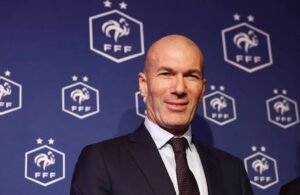
Now, in 2026, Zidane has entered another remarkable chapter as the head coach of the France national team.
This is the complete story of Zinedine Zidane, a boy from Marseille who grew into one of the most respected names in football history.
Early Life and Childhood: Growing Up in Marseille
Zinedine Yazid Zidane was born on June 23, 1972, in Marseille, France. He grew up in La Castellane, a residential neighbourhood in the northern part of the city.
His parents, Smail and Malika Zidane, were originally from Algeria and belonged to the Kabyle community. They moved to France before Zidane was born, building their family life in Marseille.
Zidane was the youngest of five children. His childhood was closely connected to his family, his neighbourhood, and the everyday experiences of growing up in a working-class community.
Football quickly became his favourite activity. Like many children in Marseille, he spent hours playing with friends, developing his skills on local streets and open spaces.
He did not become famous overnight. His journey began with simple things: learning to control the ball, passing accurately, protecting possession, and understanding how to move around opponents.
What made him special was not simply his ability to perform tricks. Even as a young player, he showed an unusual calmness with the ball. He seemed comfortable in situations where other players would panic.
That natural composure would eventually become one of the defining features of his professional career.
How Zinedine Zidane Discovered His Footballing Talent
Zidane started playing organised youth football in Marseille before joining the AS Cannes youth academy as a teenager.
His move to Cannes was an important turning point. It took him away from familiar surroundings and introduced him to a more demanding football environment.
At the academy, he received professional coaching and began developing the technical and tactical qualities needed to compete at a higher level.
His progress was impressive, and he eventually made his senior debut for Cannes in 1989 at just 17 years old.
For a young player, entering professional football was a major achievement. However, Zidane still had plenty to prove.
He continued learning, improving his physical preparation, and adapting to the speed and intensity of senior football.
Cannes gave him the opportunity to show his potential. More importantly, it provided the first major step toward a career that would eventually take him to the top of world football.
Girondins de Bordeaux: The Club That Changed His Career
In 1992, Zidane joined Girondins de Bordeaux after spending his early professional years at Cannes.
This transfer proved to be one of the most important decisions of his career.
At Bordeaux, he began attracting attention beyond France. His performances showed that he was not an ordinary attacking midfielder. He could control the pace of a match, create opportunities, and make intelligent decisions under pressure.
He also developed strong relationships with teammates such as Christophe Dugarry and Bixente Lizarazu.
One of the biggest moments of his Bordeaux career came during the 1995–96 UEFA Cup campaign.
Bordeaux produced an impressive European run and reached the final against Bayern Munich. Although the French club lost over two legs, the competition gave Zidane valuable experience on the European stage.
His performances helped establish him as one of the most exciting midfielders in French football.
Soon, bigger European clubs began paying attention. Juventus eventually secured his signature in 1996, opening the door to an even greater challenge.
Juventus: The Beginning of an International Superstar
Moving to Juventus in 1996 was a defining moment in Zidane’s career.
Italian football was known for its tactical discipline, strong defensive organisation, and demanding competition. For an attacking midfielder, succeeding in Serie A required more than technical ability.
Zidane adapted quickly.
He became an important part of Juventus’s midfield, using his vision, balance, and outstanding ball control to influence matches.
During his time in Turin, he helped the club win two consecutive Serie A titles in the 1996–97 and 1997–98 seasons.
Juventus also reached the UEFA Champions League final in 1997 and 1998. Although the club lost both finals, Zidane’s performances against Europe’s strongest teams increased his international reputation.
He was no longer simply a promising French midfielder. He had become one of the leading footballers in the world.
1998: The Year Zidane Reached Football Immortality
The year 1998 changed Zidane’s life forever.
His performances for Juventus and France brought him enormous recognition. He became the central figure in one of the most memorable periods in French football history.
That year, he won the Ballon d’Or, becoming the world’s most celebrated individual football award winner.
However, the biggest moment was still ahead.
France was preparing to host the 1998 FIFA World Cup, and the country was hoping its national team could achieve something special.
Zidane would soon become the face of that historic achievement.
France and the 1998 FIFA World Cup: A Nation’s Greatest Football Moment
Zidane made his international debut for France on August 17, 1994, against the Czech Republic.
He gradually became one of the national team’s most important players. His technique, passing ability, and creativity made him a central figure in the French midfield.
At the 1998 FIFA World Cup, France had a talented squad featuring players such as Didier Deschamps, Marcel Desailly, Lilian Thuram, Youri Djorkaeff, and Emmanuel Petit.
The tournament was held in France, placing enormous expectations on the home team.
Zidane played an important role throughout the competition, although he missed matches after receiving a red card against Saudi Arabia in the group stage.
France continued its campaign and eventually reached the final.
The Night That Made Zidane a National Hero
On July 12, 1998, France faced Brazil in the World Cup final at the Stade de France.
Brazil arrived with an outstanding team, while France hoped to win its first-ever World Cup.
The match became one of the most important nights in the country’s sporting history.
Zidane scored two first-half goals with his head from corner kicks. His performance helped France establish control over the final.
Emmanuel Petit added another goal in the closing minutes.
France won 3–0, becoming world champions for the first time.
For Zidane, this was more than a football victory. He had become a national hero, and his name would forever be connected with France’s historic World Cup triumph.
The victory also helped establish a powerful new generation of French football.
UEFA Euro 2000: Proving His Greatness Again
Winning the World Cup was an extraordinary achievement, but Zidane did not stop there.
Two years later, he helped France win UEFA Euro 2000, held in Belgium and the Netherlands.
France entered the competition with a strong squad and high expectations.
Zidane was one of the team’s most influential players. His creativity, movement, and ability to control important matches played a major role in the campaign.
France reached the final and faced Italy.
Italy initially took the lead, but Sylvain Wiltord scored a late equaliser. David Trezeguet then scored the golden goal in extra time.
France won 2–1 and became European champions.
Winning the 1998 World Cup and Euro 2000 in succession placed Zidane among the most celebrated footballers of his generation.
He had become a player who could deliver on the biggest international stages.
Real Madrid: Becoming Part of Football’s Galácticos
In July 2001, Zidane made another major career move by joining Real Madrid from Juventus.
The transfer was one of the most expensive in football history at the time.
Real Madrid were building their famous Galácticos team, bringing together some of the world’s most recognisable football stars.
Zidane joined players including Luís Figo, Raúl, Roberto Carlos, Ronaldo Nazário, and later David Beckham.
For supporters, seeing so many extraordinary players together was exciting. But Zidane had a different quality that made him stand out.
He did not need to dominate every moment of a match. Sometimes a single pass, turn, or piece of movement was enough to change everything.
His elegant playing style quickly became a symbol of the Galácticos era.
The Legendary 2002 Champions League Final Goal
One of the greatest moments in Zidane’s club career came on May 15, 2002.
Real Madrid faced Bayer Leverkusen in the UEFA Champions League final at Hampden Park in Glasgow.
The match was closely contested, and the score was 1–1 when Roberto Carlos delivered a high cross into the penalty area.
Zidane positioned himself perfectly and struck the ball with his left foot.
The volley flew into the net, producing one of the most beautiful goals in Champions League history.
Real Madrid won the final 2–1.
That goal became an unforgettable part of football history and remains one of the defining images of Zidane’s career.
He had finally won the Champions League as a player.
His Final Seasons at Real Madrid
Zidane continued playing for Real Madrid until 2006.
During his five seasons at the club, he made 227 official appearances and scored 49 goals.
He also helped Real Madrid win the 2002 Intercontinental Cup, the 2002 UEFA Super Cup, the 2002–03 La Liga title, and two Spanish Super Cups.
His time in Madrid confirmed his status as one of the most technically gifted players ever to play for the club.
However, his football journey was approaching an emotional ending.
2006 FIFA World Cup: A Final Filled With Emotion and Controversy
Zidane announced that the 2006 FIFA World Cup would be his final professional tournament.
Many supporters hoped he could end his career with another major international trophy.
France did not begin the tournament as overwhelming favourites, but Zidane’s performances helped the team progress through the knockout stages.
He was particularly influential in the matches against Spain, Brazil, and Portugal.
France eventually reached the final against Italy on July 9, 2006, in Berlin.
Zidane’s Last World Cup Match
The final began dramatically.
Zidane scored France’s opening goal with a Panenka-style penalty that struck the underside of the crossbar before crossing the goal line.
Italy later equalised through Marco Materazzi.
The match remained level and went into extra time.
Then came an incident that shocked football fans around the world.
Following an exchange with Materazzi, Zidane headbutted the Italian defender in the chest. The referee showed him a red card.
Zidane walked off the pitch, ending his professional playing career in a way few people could have imagined.
Italy eventually won the match in a penalty shootout.
Although the final ended in controversy, Zidane had already established an extraordinary football legacy.
He finished his international career with 108 appearances and 31 goals for France.
Life After Retirement: From Football Superstar to Manager
Retiring from professional football did not mean leaving the sport behind.
Zidane remained connected to Real Madrid and gradually began preparing for a future in management.
He worked in advisory roles and later became an assistant coach under Carlo Ancelotti during the Italian manager’s first spell at Real Madrid.
This experience gave him an opportunity to observe the responsibilities of managing a team at the highest level.
In 2014, he became the manager of Real Madrid Castilla, the club’s reserve team.
Working with younger players helped him develop his coaching philosophy and leadership skills.
Then, in January 2016, an unexpected opportunity arrived.
Real Madrid appointed Zidane as the head coach of its first team.
Real Madrid Manager: Three Consecutive Champions League Titles
Zidane’s appointment as Real Madrid manager attracted worldwide attention.
He was one of the greatest former players in football, but many people questioned whether he could achieve the same level of success as a manager.
He answered those questions through results.
In his first season, he guided Real Madrid to the 2015–16 UEFA Champions League title, defeating Atlético Madrid in the final after a penalty shootout.
But that was only the beginning.
The Historic Champions League Hat-Trick
Real Madrid won the Champions League again in 2016–17.
They defeated Juventus 4–1 in the final, producing a dominant performance.
In the following season, the club won the competition for a third consecutive time, defeating Liverpool 3–1 in the 2017–18 final.
This achievement made Zidane the first manager to win three consecutive European Cup or UEFA Champions League titles.
It was an extraordinary accomplishment in an era when Europe’s biggest clubs competed with enormous financial resources and world-class squads.
During his first spell as manager, Zidane also won two UEFA Super Cups, two FIFA Club World Cups, La Liga, and the Spanish Super Cup.
He left the position in May 2018, having achieved an incredible amount in a relatively short period.
Returning to Real Madrid in 2019
In March 2019, Zidane returned to Real Madrid after the club experienced a difficult period.
His second spell was different from the first. The squad was changing, several experienced players were ageing, and the team needed to rebuild its confidence.
Nevertheless, Zidane guided Real Madrid to the 2019–20 La Liga title.
He also won the 2020 Spanish Super Cup.
He eventually left the club in May 2021.
Across his two spells, Zidane won 11 major trophies as Real Madrid’s first-team manager.
His success established him as one of the most accomplished managers of his generation.
Zinedine Zidane in 2026: A New Beginning With France
After leaving Real Madrid in 2021, Zidane did not immediately return to club management.
For several years, football supporters continued to speculate about where he might coach next.
Many expected him to take charge of France one day because of his historic connection with the national team.
That long-awaited opportunity finally arrived in 2026.
On July 28, 2026, Zidane was officially appointed head coach of the France national team, replacing Didier Deschamps.
He signed a four-year contract running through the 2030 FIFA World Cup.
This appointment represents a remarkable full-circle moment.
Nearly two decades after helping France win the World Cup as a player, Zidane now has the responsibility of leading the country’s next generation of footballers.
The expectations are naturally high. France possesses considerable talent, including players such as Kylian Mbappé and Ousmane Dembélé.
However, managing an international team is different from managing a club. Zidane’s biggest challenge will be bringing individual talent together into a successful national side.
For him, this is not simply another coaching position. It is an opportunity to continue the story he began with France in 1994.
Zinedine Zidane’s Playing Style: Why Was He So Special?
Zidane’s football was built around intelligence, technique, and control.
He was not the fastest player on the pitch, nor did he rely on physical strength to dominate opponents.
Instead, he used his understanding of space and timing to make football look simple.
**Exceptional Ball Control**
His ability to receive difficult passes and keep the ball under pressure was extraordinary. Defenders often struggled to take possession away from him.
**Vision and Creativity**
Zidane could see passing opportunities before they became obvious. His ability to create chances made him an influential attacking midfielder.
**The Marseille Turn**
One of his signature techniques was the 360-degree turn, often called the Marseille Turn or Roulette. It allowed him to turn away from opponents while keeping the ball close.
**Outstanding First Touch**
His first touch gave him control of difficult situations. He could receive the ball, change direction, and prepare his next move almost instantly.
**Composure Under Pressure**
Perhaps his most remarkable quality was his calmness. Even in important matches, he rarely appeared rushed when controlling possession.
These qualities helped make Zidane one of the most admired midfielders in football history.
Zinedine Zidane’s Wife and Family Life
Behind the famous football career is a family life that Zidane has generally kept away from the spotlight.
He married Véronique Zidane in 1994. The couple met in France during their younger years and have built a family together.
They have four sons: Enzo, Luca, Théo, and Elyaz.
All four sons have developed connections with football.
Enzo pursued a professional playing career, Luca became a goalkeeper, and Théo and Elyaz also followed football pathways.
Despite his international fame, Zidane has generally maintained a private lifestyle.
His family has remained an important part of his life throughout his career, from his early days in Marseille to his success at Real Madrid.
Zinedine Zidane’s Net Worth and Sources of Income
Zinedine Zidane’s long career at the highest level of football has brought him significant financial success.
His income has come from several sources, including professional football contracts, managerial salaries, sponsorship agreements, commercial partnerships, and public appearances.
However, his exact net worth in 2026 has not been established through publicly available, independently audited financial information.
Different websites publish different estimates, but those figures should be treated as unofficial rather than confirmed facts.
His long-standing reputation in international football has nevertheless made him one of the sport’s most recognisable commercial personalities.
Zinedine Zidane’s Awards, Records and Major Achievements
Zidane’s career is filled with individual honours and major team trophies.
Major Achievements as a Player
– FIFA World Cup: 1998
– UEFA European Championship: 2000
– Ballon d’Or: 1998
– FIFA World Player of the Year: 1998, 2000, 2003
– UEFA Champions League: 2002
– Serie A: 1996–97, 1997–98
– La Liga: 2002–03
– FIFA World Cup Golden Ball: 2006
– UEFA Euro 2000 Player of the Tournament
Major Achievements as a Manager
– UEFA Champions League: 2015–16, 2016–17, 2017–18
– La Liga: 2016–17, 2019–20
– FIFA Club World Cup: 2016, 2017
– UEFA Super Cup: 2016, 2017
– Spanish Super Cup: 2017, 2020
– The Best FIFA Men’s Coach: 2017
His three consecutive Champions League titles remain the defining achievement of his managerial career.
Interesting Facts About Zinedine Zidane
1. Zinedine Zidane was born in Marseille, France, on June 23, 1972.
2. His parents came from Algeria and had Kabyle roots.
3. His famous nickname is Zizou.
4. He won the Ballon d’Or in 1998.
5. He scored twice in the 1998 FIFA World Cup final.
6. He helped France win both the 1998 World Cup and Euro 2000.
7. His left-footed volley in the 2002 Champions League final is considered one of the competition’s most memorable goals.
8. He played 108 international matches for France and scored 31 goals.
9. He received the FIFA World Cup Golden Ball in 2006.
10. He won three consecutive Champions League titles as Real Madrid manager.
11. He has four sons: Enzo, Luca, Théo, and Elyaz.
12. He became France’s national team head coach in July 2026.
Frequently Asked Questions About Zinedine Zidane
**1. Who is Zinedine Zidane?**
Zinedine Zidane is a French football legend and manager who became famous for his achievements with France, Juventus, and Real Madrid.
**2. When was Zinedine Zidane born?**
He was born on June 23, 1972, in Marseille, France.
**3. How old is Zinedine Zidane in 2026?**
He is 54 years old as of November 2026.
**4. What is Zinedine Zidane’s nickname?**
His popular nickname is Zizou.
**5. How many World Cups did Zidane win?**
He won one FIFA World Cup as a player, with France in 1998.
**6. Did Zinedine Zidane win the Ballon d’Or?**
Yes. He won the Ballon d’Or in 1998.
**7. Which clubs did Zidane play for?**
He played for Cannes, Girondins de Bordeaux, Juventus, and Real Madrid.
**8. How many Champions League titles did Zidane win as a manager?**
He won three consecutive titles with Real Madrid in 2016, 2017, and 2018.
**9. Who is Zinedine Zidane’s wife?**
His wife is Véronique Zidane. They married in 1994.
**10. How many children does Zinedine Zidane have?**
He has four sons: Enzo, Luca, Théo, and Elyaz.
**11. What happened in Zidane’s final professional match?**
In the 2006 World Cup final against Italy, Zidane scored a Panenka-style penalty but was sent off during extra time following an incident with Marco Materazzi. Italy eventually won the match on penalties.
**12. Which national team does Zidane manage in 2026?**
As of November 2026, he is the head coach of the France national team.
Conclusion: A Football Legend Whose Story Continues
Zinedine Zidane’s story is about much more than winning trophies.
It is the story of a young boy from Marseille who developed his talent through dedication and eventually reached the highest level of world football. He experienced unforgettable victories, difficult defeats, extraordinary recognition, and moments of controversy.
As a player, he inspired millions through his technique and intelligence. As a manager, he proved that his understanding of football could create success from the sidelines.
His 1998 World Cup triumph, his unforgettable Champions League volley, and his three consecutive Champions League titles as a manager will remain important chapters in football history.
Now, as France’s head coach in 2026, Zidane has another opportunity to write a new chapter.
His playing days may be over, but his connection with football is far from finished. For generations of supporters, Zinedine Zidane will always be remembered as one of the most elegant and influential figures ever to grace the beautiful game.
Discover the inspiring lives, remarkable careers, achievements, and personal journeys of more iconic stars. Read Full Biography