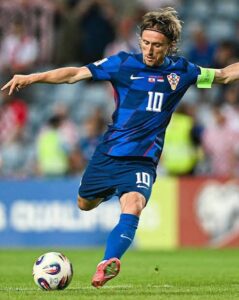
Luka Modrić is one of the greatest midfielders in the history of football. Known for his extraordinary vision, elegant ball control, intelligent passing, and remarkable composure under pressure, the Croatian football legend has earned the respect of fans around the world. From a difficult childhood during the Croatian War of Independence to winning multiple UEFA Champions League titles and the prestigious Ballon d’Or, his journey is a powerful story of perseverance, discipline, and determination.
As of 2026, Modrić continues to compete at the highest level of professional football with AC Milan in Italy and remains an important figure for the Croatian national team. Even in his forties, he demonstrates why intelligence, experience, and dedication can be just as valuable as speed and physical strength.
But how did a young boy from Croatia become one of the most respected midfielders of his generation? What challenges did he overcome, and how did he establish himself among football’s greatest players?
Let’s explore the complete life story of Luka Modrić, including his childhood, family, career, awards, personal life, and achievements up to 2026.
Early Life and Childhood
Luka Modrić was born on September 9, 1985, in Zadar, Croatia, which was then part of Yugoslavia. He grew up in a family that valued hard work, resilience, and determination. However, his childhood was far from easy.
When Modrić was still young, Croatia experienced the devastating effects of war. His family was forced to leave their home, and they spent part of his early childhood living in difficult circumstances in Zadar. The conflict brought uncertainty, fear, and hardship into his life at an age when most children were simply enjoying school and playing with their friends.
One of the most painful events in his early life was the death of his paternal grandfather, Luka Modrić Sr., during the war in 1991. This tragedy deeply affected the family and became part of the difficult history surrounding his childhood.
Despite these challenges, football became an important source of happiness and hope for the young Luka. He frequently played the game wherever he could, developing the skills and confidence that would eventually shape his future.
His early experiences helped him develop mental strength and the ability to remain calm in difficult situations. These qualities later became defining characteristics of his playing style.
How Luka Modrić Fell in Love With Football
From an early age, Modrić showed a natural interest in football. While growing up in challenging circumstances, he found comfort in playing the game and improving his skills.
He did not possess the powerful physical build associated with many traditional midfielders. Instead, he relied on balance, quick thinking, technical ability, and an excellent understanding of the game.
As a young player, he learned how to control the ball in tight spaces, move away from opponents, and identify passing opportunities before other players noticed them.
His talent did not immediately guarantee success. Some people questioned whether his small stature would allow him to compete against stronger opponents. However, Modrić continued working on his game and gradually proved that football intelligence could overcome physical disadvantages.
His determination eventually helped him enter the youth development system at Dinamo Zagreb, one of Croatia’s leading football clubs.
Youth Career and the Beginning of His Professional Journey
Modrić joined the youth system of Dinamo Zagreb as a teenager. The club provided him with an important opportunity to develop his technical abilities and gain experience in competitive football.
However, his development required patience. Rather than immediately becoming a star at the highest level, he spent time learning the demands of senior football through loan spells.
During the 2003–2004 season, he played for Zrinjski Mostar in Bosnia and Herzegovina. This experience helped him adapt to the physical nature of professional football.
He later joined Inter Zaprešić in Croatia on loan, where he continued improving his performances and gaining valuable playing time.
These early experiences were essential to his growth. They taught him how to compete against experienced players, make decisions under pressure, and take responsibility for his team’s performance.
Modrić eventually returned to Dinamo Zagreb and became one of the club’s standout midfielders. His performances helped attract attention from clubs outside Croatia.
Success at Dinamo Zagreb
Modrić’s return to Dinamo Zagreb marked a major step forward in his professional career.
He became an influential part of the team’s midfield, helping the club win domestic trophies and establish itself as a dominant force in Croatian football.
During his time with Dinamo Zagreb, he won three Croatian league titles, two Croatian Cups, and one Croatian Super Cup.
His performances also earned individual recognition, including Croatian Footballer of the Year honours in 2007 and 2008.
What made Modrić special was his ability to influence matches without relying exclusively on goals. He could control the rhythm of a game, distribute the ball accurately, and help his team move from defence to attack.
His performances in Croatia convinced English club Tottenham Hotspur that he had the qualities required to succeed in the Premier League.
Tottenham Hotspur: His Breakthrough in English Football
In 2008, Modrić joined Tottenham Hotspur, beginning a new chapter in his career.
Moving to England was a significant challenge. The Premier League was known for its intense pace, physical challenges, and demanding schedule. Some observers questioned whether Modrić’s smaller frame would be suitable for the competition.
However, he gradually demonstrated his quality.
At Tottenham, Modrić became known for his excellent close control, intelligent movement, accurate passing, and ability to create opportunities for teammates. He helped the team maintain possession and move the ball effectively through midfield.
Under manager Harry Redknapp, Tottenham developed into a competitive side capable of challenging established English clubs.
The 2010–2011 season was particularly important. Tottenham reached the quarter-finals of the UEFA Champions League, marking a memorable European campaign for the club.
Modrić’s performances attracted attention from several major European teams. His ability to influence matches through technique and intelligence made him one of the most admired midfielders in England.
After four seasons with Tottenham, he was ready for one of the biggest moves of his career.
Real Madrid: The Move That Changed His Career
In 2012, Modrić joined Real Madrid, one of the most successful and demanding football clubs in the world.
The transfer represented a major opportunity, but it also came with enormous pressure. Real Madrid expected immediate results, and the competition for places in the team was intense.
His early months were not easy. Some critics questioned his performances, and he needed time to adjust to the club’s playing style.
However, Modrić remained patient and continued working hard.
Gradually, he became one of the most important players in the squad. His ability to control possession, escape pressure, and deliver precise passes made him an essential part of the midfield.
He helped Real Madrid win the UEFA Champions League in the 2013–2014 season, when the club secured its historic tenth European Cup, known as La Décima.
That victory marked the beginning of a remarkable period of success.
Becoming One of the World’s Best Midfielders
Over the following seasons, Modrić developed into a central figure in Real Madrid’s midfield.
His partnership with Toni Kroos and Casemiro became particularly influential. Together, they provided technical quality, tactical intelligence, defensive protection, and creative distribution.
The trio helped Real Madrid dominate important matches in Spain and Europe.
Modrić played a crucial role in the club’s three consecutive Champions League triumphs from 2016 to 2018. His ability to control the tempo of matches was especially valuable in high-pressure knockout games.
Rather than simply passing the ball, he understood when to accelerate an attack, when to slow the game down, and when to take risks.
These qualities established him as one of the most complete midfielders of his generation.
A Historic Legacy at Real Madrid
Modrić spent 13 seasons at Real Madrid, from 2012 until 2025.
According to the club’s official retrospective, he made 597 appearances and scored 43 goals in all competitions, winning 28 trophies during his time in Madrid.
His achievements included:
– Six UEFA Champions League titles.
– Four La Liga titles.
– Two Copa del Rey trophies.
– Five Spanish Super Cups.
– Five UEFA Super Cups.
– Six Club World Cup titles.
These achievements made him Real Madrid’s most decorated player in terms of trophies won for the club at the time of his departure.
His influence extended beyond statistics. He became a leader in the dressing room, earned the admiration of teammates and opponents, and helped establish a standard of professionalism for younger players.
In 2025, Modrić brought his extraordinary Real Madrid chapter to an end, leaving behind a legacy that will be remembered for generations.
Luka Modrić Wins the Ballon d’Or in 2018
The year 2018 was arguably the most remarkable year of Modrić’s career.
After years of outstanding performances at club level, he received worldwide recognition for his achievements with Real Madrid and Croatia.
He won the Ballon d’Or, becoming the first Croatian player to receive the award.
The Ballon d’Or is one of football’s most prestigious individual honours, recognising the player judged to have delivered the finest performances during the relevant period.
Modrić also won The Best FIFA Men’s Player award and the UEFA Men’s Player of the Year award in 2018.
His success was particularly significant because it interrupted the long period of Ballon d’Or dominance enjoyed by Lionel Messi and Cristiano Ronaldo.
For Modrić, the award represented recognition not only of his technical ability but also of his leadership, consistency, and influence on the biggest stages.
His achievement inspired young footballers around the world, particularly those who do not fit the traditional image of a powerful or physically dominant player.
FIFA World Cup 2018: Leading Croatia to the Final
Modrić’s achievements at the 2018 FIFA World Cup in Russia became one of the defining moments of his career.
As captain of Croatia, he led his national team through a memorable tournament that captured the attention of football fans worldwide.
Croatia produced outstanding performances throughout the competition, defeating several strong opponents on their way to the final.
Modrić played a vital role in the team’s progress. His passing, movement, leadership, and ability to manage pressure helped Croatia control matches and create attacking opportunities.
The team reached the World Cup final for the first time in its history as an independent nation.
Croatia eventually lost 4–2 to France in the final, finishing as runners-up. Although the team did not lift the trophy, its achievement represented a historic moment for Croatian football.
Modrić was awarded the Golden Ball as the tournament’s best player.
His performances demonstrated that a player from a relatively small footballing nation could compete with the world’s biggest stars and earn global recognition.
For many supporters, his World Cup campaign remains one of the greatest individual achievements in Croatian sporting history.
Croatia’s Third-Place Finish at the 2022 World Cup
Four years after the 2018 final, Modrić once again led Croatia at the FIFA World Cup in Qatar.
Despite being older and facing intense competition, he continued to demonstrate exceptional endurance, tactical awareness, and technical ability.
Croatia progressed through the knockout stages and reached the semi-finals, where they lost to Argentina.
The team then defeated Morocco in the third-place playoff to secure the bronze medal.
This result confirmed that Croatia’s success in 2018 was not simply a one-time achievement. The country had established itself as a consistent force in international football.
Modrić’s leadership was central to that success. He helped younger teammates understand the demands of international competition while continuing to contribute on the pitch himself.
His performances in consecutive World Cups strengthened his reputation as one of the most reliable and intelligent midfielders of his era.
Luka Modrić’s Playing Style: What Makes Him Special?
Luka Modrić is widely admired because his game combines technical excellence with exceptional football intelligence.
He does not depend on physical strength or explosive speed to dominate midfield. Instead, he uses anticipation, balance, movement, and awareness to stay one step ahead of opponents.
1. Exceptional Passing Ability
Modrić can deliver short passes to maintain possession and longer passes to change the direction of an attack.
His passing range allows his team to move the ball quickly while creating opportunities for attacking players.
2. Outstanding Vision
One of his greatest strengths is his ability to recognise spaces before they fully open.
He often identifies passing lanes that other players overlook, allowing him to create opportunities even when opponents apply intense pressure.
3. Excellent Ball Control
Modrić is comfortable receiving the ball in crowded areas.
His close control and quick footwork allow him to escape defenders and maintain possession in difficult situations.
4. Intelligent Movement
He constantly adjusts his position to offer teammates a passing option.
This movement helps his team maintain control of the game and makes it more difficult for opponents to organise their defence.
5. Composure Under Pressure
Modrić rarely appears rushed when facing aggressive opponents.
He often uses a small change of direction, a quick pass, or a carefully timed movement to escape pressure.
6. Leadership and Experience
His leadership is based on professionalism, consistency, and an understanding of the game.
Rather than relying only on emotional speeches, he leads through his performances and his commitment to the team.
These qualities explain why Modrić has remained competitive at an elite level well into his forties.
Luka Modrić Joins AC Milan
After leaving Real Madrid in 2025, Modrić began a new chapter by joining AC Milan in Italy.
The move allowed him to continue competing in European football while bringing his experience to one of the continent’s most historic clubs.
He signed an initial contract running until June 30, 2026, with an option for an additional season. In July 2026, AC Milan officially announced that his contract had been extended until June 30, 2027.
He continues to wear the number 14 shirt.
His decision to continue playing reflects his enduring passion for football. Even after winning numerous major trophies, he remains motivated to contribute to his team’s success.
At Milan, his experience and midfield intelligence offer valuable qualities to a squad competing in Italian and European competitions.
For fans, his move also provides an opportunity to watch one of football’s most accomplished midfielders in a new environment.
Luka Modrić’s Career in 2026
As of 2026, Modrić remains an active professional footballer with AC Milan.
His career has already included extraordinary achievements at club and international level, but he continues to pursue new challenges rather than relying solely on his past success.
His experience is particularly valuable in matches where controlling possession and making intelligent decisions can determine the outcome.
Modrić also remains connected to the Croatian national team. In September 2026, reports confirmed that he would remain available for international duty following the World Cup, ending speculation that he would immediately retire from international football.
His continued involvement reflects his commitment to representing his country.
At this stage of his career, every season adds another chapter to a remarkable sporting story. His longevity is especially impressive because central midfielders must constantly read the game, cover space, and make decisions under pressure.
Modrić’s example demonstrates how technical ability, fitness, and tactical intelligence can help a player remain competitive long after many of his contemporaries have retired.
Luka Modrić’s Family and Personal Life
Although Modrić is internationally famous, he generally keeps his personal life away from unnecessary public attention.
He is married to Vanja Bosnić, and the couple have three children: a son, Ivano, and two daughters, Ema and Sofia.
His family has remained an important part of his life throughout his professional journey.
Despite playing for major clubs and appearing in some of the world’s biggest sporting events, Modrić is known for maintaining a relatively private lifestyle.
He rarely makes his private life the centre of public attention. Instead, most of his public identity is associated with football, professionalism, and his commitment to his teams.
His journey from a difficult childhood in Croatia to becoming a global football icon is also a reminder of the importance of family support and personal resilience.
Luka Modrić’s Awards and Major Achievements
Throughout his career, Modrić has received numerous team and individual honours.
Some of the most significant include:
– **Ballon d’Or:** 2018.
– **The Best FIFA Men’s Player:** 2018.
– **UEFA Men’s Player of the Year:** 2018.
– **FIFA World Cup Golden Ball:** 2018.
– **FIFA World Cup Bronze Ball:** 2022.
– **UEFA Champions League titles:** Six with Real Madrid.
– **La Liga titles:** Four with Real Madrid.
– **Croatian domestic league titles:** Three with Dinamo Zagreb.
– **FIFA World Cup runner-up:** 2018 with Croatia.
– **FIFA World Cup third place:** 2022 with Croatia.
– **Record international appearances for Croatia:** A landmark of his national-team career.
These honours reflect both his individual excellence and his contribution to successful teams.
His career is especially notable because he has achieved success across different leagues, international tournaments, and generations of football.
Luka Modrić’s Net Worth in 2026
Luka Modrić has earned substantial income throughout his long professional football career.
However, an exact and independently verified figure for his personal net worth in 2026 is not publicly established.
Online estimates can vary considerably because they may use different assumptions about salaries, bonuses, taxes, investments, property, and personal expenses.
For that reason, it is more accurate to describe Modrić as a highly successful and wealthy professional footballer than to present an unverified net-worth estimate as a confirmed fact.
His sporting legacy is based on achievements that can be documented far more reliably than estimates of his private finances.
Why Luka Modrić Is an Inspiration to Young Footballers
Modrić’s life offers several valuable lessons for aspiring footballers.
**Believe in your abilities.** His relatively small stature led some observers to question his potential, but he continued developing his skills.
**Stay patient during difficult periods.** His early career included loan spells and challenges that required time and persistence.
**Focus on improving every day.** Technical ability, physical preparation, and tactical awareness helped him compete against some of the world’s best players.
**Learn from setbacks.** Early criticism at Real Madrid did not prevent him from becoming one of the club’s most important midfielders.
**Respect teamwork.** His success was built not only on individual talent but also on his ability to work with teammates and contribute to collective goals.
**Never stop learning.** Even after winning the biggest individual and team awards, he continued to adapt to new teams and footballing challenges.
For young players, his story demonstrates that success does not always follow a straight path. Talent matters, but dedication, discipline, and the ability to overcome setbacks are equally important.
Luka Modrić’s Legacy in World Football
Luka Modrić has established a lasting place in football history through his achievements with Real Madrid and Croatia.
He helped Real Madrid win six Champions League titles, became the first Croatian player to win the Ballon d’Or, and captained his country to a historic World Cup final.
His influence goes beyond trophies. He has shown that a midfielder can control a match through intelligence, technique, and decision-making rather than physical dominance.
His career has also challenged traditional expectations about age in professional football. By continuing to compete at an elite level in 2026, he has demonstrated the value of experience, discipline, and a deep understanding of the game.
His story is not simply about winning awards. It is about overcoming adversity, earning respect, and continually proving his value on the biggest stages.
Frequently Asked Questions About Luka Modrić
1. Who is Luka Modrić?
Luka Modrić is a Croatian professional footballer who plays as a central midfielder for AC Milan and represents Croatia internationally. He is widely regarded as one of the greatest midfielders of his generation.
2. How old is Luka Modrić in 2026?
Luka Modrić is 41 years old in 2026. He was born on September 9, 1985.
3. Which club does Luka Modrić play for in 2026?
As of 2026, Modrić plays for AC Milan in Italy. The club extended his contract until June 30, 2027.
4. Has Luka Modrić won the Ballon d’Or?
Yes. He won the Ballon d’Or in 2018 after an outstanding year with Real Madrid and the Croatian national team.
5. How many Champions League titles has Luka Modrić won?
Modrić won six UEFA Champions League titles with Real Madrid during his 13 seasons at the club.
6. Did Luka Modrić win the FIFA World Cup?
No. Croatia finished as runners-up at the 2018 FIFA World Cup and secured third place at the 2022 tournament. Modrić won the Golden Ball as the best player of the 2018 competition.
7. Who is Luka Modrić’s wife?
Luka Modrić is married to Vanja Bosnić. They have three children together.
8. How many children does Luka Modrić have?
He has three children: a son named Ivano and two daughters named Ema and Sofia.
9. What position does Luka Modrić play?
He primarily plays as a central midfielder. His responsibilities include distributing the ball, controlling the tempo, creating opportunities, and helping his team maintain possession.
10. What makes Luka Modrić such a great footballer?
His exceptional vision, accurate passing, close control, tactical intelligence, composure, and leadership make him one of football’s most respected midfielders.
11. What is Luka Modrić’s net worth in 2026?
His exact net worth in 2026 has not been independently verified. Although he has earned substantial income from football and commercial partnerships, publicly available estimates should be treated with caution.
12. Is Luka Modrić still playing football in 2026?
Yes. He remains an active professional footballer with AC Milan and continues to be available for Croatia’s national team.
Conclusion
Luka Modrić’s life story is an extraordinary example of how determination, intelligence, and dedication can transform a difficult beginning into an exceptional career.
From his childhood in war-affected Croatia to his rise at Dinamo Zagreb and Tottenham Hotspur, he steadily developed into one of the finest midfielders in the world. His achievements at Real Madrid, his historic Ballon d’Or victory in 2018, and his leadership of Croatia at the World Cup have secured his place among football’s modern greats.
As of 2026, his journey continues with AC Milan, demonstrating that his passion for the game remains strong even after decades of professional success.
Modrić’s legacy is not measured only by trophies or individual awards. It is also defined by the respect he has earned, the example he has set for young players, and the belief that intelligence and perseverance can overcome enormous challenges.
Discover the inspiring lives, remarkable careers, achievements, and personal journeys of more iconic stars. Read Full Biography