Introduction
Mel Gibson is an American-born actor, director, producer, and screenwriter who became one of the most recognizable figures in international cinema. Famous for his performances in *Mad Max* and the *Lethal Weapon* franchise, Gibson later established himself as a filmmaker through ambitious historical and religious dramas, including *Braveheart*, *The Passion of the Christ*, *Apocalypto*, and *Hacksaw Ridge*.
Throughout his career, Gibson has demonstrated an ability to move between action, drama, comedy, and large-scale historical storytelling. His work as a director has earned major industry recognition, including Academy Awards for *Braveheart*. At the same time, his career has been affected by public controversies that have influenced his reputation in Hollywood.
In 2026, Gibson remains active in filmmaking. His long-awaited project *The Resurrection of the Christ*, a follow-up to *The Passion of the Christ*, has completed filming and is planned as a two-part production scheduled for release in 2027 and 2028.
This Mel Gibson biography explores his early life, acting career, most famous movies, directing achievements, awards, family, controversies, and latest projects as of 2026.
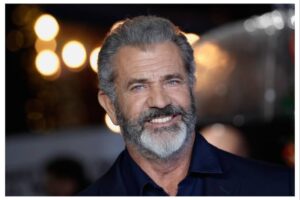
Mel Gibson Quick Facts
– **Full name:** Mel Columcille Gerard Gibson
– **Date of birth:** January 3, 1956
– **Age in 2026:** 70 years old
– **Birthplace:** Peekskill, New York, United States
– **Nationality:** American-born Australian-American
– **Profession:** Actor, film director, producer, and screenwriter
– **Known for:** *Mad Max*, *Lethal Weapon*, *Braveheart*, and *The Passion of the Christ*
– **Academy Awards:** Best Director and Best Picture as a producer for *Braveheart*
– **Film production company:** Icon Productions
– **Former spouse:** Robyn Moore
– **Notable directorial works:** *Braveheart*, *The Passion of the Christ*, *Apocalypto*, and *Hacksaw Ridge*
– **Latest major project:** *The Resurrection of the Christ*
Early Life and Family Background
Mel Gibson was born on January 3, 1956, in Peekskill, New York. He grew up in a large family and spent his early childhood in the United States.
When Gibson was 12 years old, his family moved to Australia. This relocation played a significant role in shaping his future because he eventually trained as an actor in Sydney and began building his career in Australian cinema.
Gibson’s father, Hutton Gibson, was a writer, while his mother, Anne Patricia, was originally from Ireland. His family background included Irish heritage, which later became a notable part of his public identity.
Growing up in Australia exposed Gibson to a different cultural environment from the one in which he was born. He eventually developed an interest in performance and began pursuing acting professionally.
Although he would later become an international Hollywood star, his early career was closely connected to Australia’s growing film industry.
Education and Acting Training
After finishing high school, Gibson attended the National Institute of Dramatic Art (NIDA) in Sydney, Australia. The institution is known for training actors and other performing-arts professionals.
At NIDA, he studied acting and developed the stage and screen skills that helped him transition into professional productions. His training included classical theater and performance techniques.
During his time as a student, Gibson appeared in stage productions and gained experience performing before live audiences. This training helped him build the confidence and discipline required for film acting.
His education at NIDA became an important foundation for his career. Within a few years, he would move from relatively small acting opportunities to leading roles in films that reached audiences around the world.
Mel Gibson’s Acting Debut and Early Career
Gibson began attracting attention in the late 1970s, when Australian cinema was gaining international visibility.
One of his earliest major film roles came in *Summer City* (1977). Although the film did not make him an international star, it provided useful experience and helped him establish himself as a young actor.
His breakthrough arrived in 1979 with *Mad Max*, directed by George Miller. Gibson played Max Rockatansky, a police officer navigating a violent, dystopian world.
The film became a landmark in Australian action cinema. Its energetic driving sequences, harsh visual style, and post-apocalyptic setting helped it reach a worldwide audience.
Gibson’s performance introduced audiences to his screen presence: an intense, physically capable leading man who could convey both determination and vulnerability.
The success of *Mad Max* helped launch a career that would eventually span acting, directing, producing, and screenwriting.
Mad Max and International Recognition
The success of *Mad Max* led Gibson to reprise his role in *Mad Max 2*, released internationally as *The Road Warrior* in 1981.
The sequel expanded the action and world-building of the original film. Gibson’s portrayal of Max helped establish the character as one of the defining action heroes of the early 1980s.
He returned in *Mad Max Beyond Thunderdome* (1985), which featured Tina Turner alongside Gibson. The film introduced the franchise to another generation of viewers and further strengthened his international reputation.
The *Mad Max* series became an important part of Gibson’s legacy. It helped establish him as an action star while demonstrating his ability to carry physically demanding roles.
Although the franchise later continued with other performers, Gibson’s original portrayal of Max remains an important chapter in the history of action cinema.
Lethal Weapon: Becoming a Hollywood Action Star
In 1987, Gibson starred opposite Danny Glover in *Lethal Weapon*, a buddy-cop action film directed by Richard Donner.
Gibson played Martin Riggs, a troubled detective whose unpredictable behavior contrasts with the more grounded personality of Roger Murtaugh, played by Glover.
The film combined action, humor, suspense, and character-driven storytelling. The chemistry between Gibson and Glover became one of its greatest strengths.
The movie was successful enough to launch a long-running franchise. Gibson and Glover returned for *Lethal Weapon 2* (1989), *Lethal Weapon 3* (1992), and *Lethal Weapon 4* (1998).
The series became one of Gibson’s signature achievements and helped establish him as a leading Hollywood actor.
His portrayal of Riggs demonstrated that he could combine physical action with comic timing and emotional complexity. It also showed that audiences responded to his ability to portray characters who were both tough and deeply flawed.
Braveheart: Mel Gibson’s Breakthrough as a Director
One of the most important moments in Gibson’s career came in 1995, when he directed and starred in *Braveheart*.
The historical epic tells a dramatized version of the story of William Wallace, a Scottish warrior associated with the Wars of Scottish Independence. Gibson played Wallace and also served as director.
The film became a major critical and commercial success. Its large-scale battles, emotional storytelling, and sweeping visual style helped make it one of the most recognizable historical epics of the 1990s.
At the 1996 Academy Awards, *Braveheart* won five Oscars, including Best Picture and Best Director for Gibson. The awards confirmed his reputation as more than an actor: he had demonstrated the ability to lead a major production from behind the camera.
Although historians have noted that the film takes substantial dramatic liberties with historical events, its impact on popular culture has endured.
*Braveheart* remains one of Gibson’s most important films because it established him as an accomplished Hollywood director and helped define the next phase of his career.
The Patriot, Signs, and Other Famous Movies
After *Braveheart*, Gibson continued appearing in commercially successful films.
The Patriot (2000)
In *The Patriot*, Gibson played Benjamin Martin, a fictionalized character in a historical drama set during the American Revolutionary War. The film combined family conflict, warfare, and political struggle.
Although it received mixed historical assessments, it reached a large audience and became one of Gibson’s recognizable performances.
What Women Want (2000)
Gibson demonstrated his comic side in *What Women Want*, playing an advertising executive who unexpectedly gains the ability to hear women’s thoughts.
The romantic comedy paired him with Helen Hunt and showed that he could succeed outside action and historical dramas.
We Were Soldiers (2002)
In *We Were Soldiers*, Gibson portrayed Lieutenant Colonel Hal Moore in a war film inspired by the Battle of Ia Drang during the Vietnam War.
The film focused on combat, leadership, military responsibility, and the effects of war on soldiers and their families.
Signs (2002)
Gibson starred in M. Night Shyamalan’s science-fiction thriller *Signs*. He played a former minister who encounters mysterious crop circles and increasingly disturbing events around his farm.
The movie became a major box-office success and demonstrated Gibson’s ability to lead a suspense-driven story with science-fiction elements.
These films helped maintain his status as a bankable leading actor during the late 1990s and early 2000s.
The Passion of the Christ: A Controversial Global Success
In 2004, Gibson directed and produced *The Passion of the Christ*, a religious drama depicting the final hours of Jesus Christ’s life.
The film was notable for its graphic portrayal of suffering, its use of ancient languages, and its intense visual style. Jim Caviezel played Jesus, while Maia Morgenstern portrayed Mary and Monica Bellucci played Mary Magdalene.
The movie became a major international box-office success despite its limited initial expectations. It also generated extensive debate over its depiction of religious history, its violence, and concerns raised by critics about antisemitic interpretations.
Gibson’s work on the film demonstrated his willingness to finance and direct projects outside conventional Hollywood formulas. Its commercial performance made it one of the most prominent independent productions of its era.
The movie remains central to his filmmaking legacy because of both its financial success and the discussions it generated about religion, cinema, and historical representation.
Apocalypto and His Distinctive Directing Style
In 2006, Gibson directed *Apocalypto*, an adventure film set in a society inspired by the Maya civilization before the arrival of Europeans.
The story follows Jaguar Paw, a young man trying to protect his family after his community is attacked. The film is known for its fast-paced pursuit sequences, intense action, and use of the Yucatec Maya language.
Gibson co-wrote and produced the film, continuing his approach of combining ambitious visuals with emotionally driven survival stories.
Like some of his earlier work, *Apocalypto* attracted praise for its filmmaking while also prompting debate about historical accuracy and cultural representation.
The film helped demonstrate that Gibson’s ambitions as a director extended beyond Hollywood settings. He continued to favor large-scale productions that placed characters in extreme circumstances.
Personal and Professional Challenges
Gibson’s career has also been affected by public controversies.
In 2006, he was arrested for driving under the influence in California. During the incident, he made antisemitic remarks that were widely reported and condemned. Gibson later issued public apologies and acknowledged that his behavior was unacceptable.
Additional controversies involving reported abusive remarks and personal conduct damaged his public reputation and contributed to a period in which he became less prominent in mainstream Hollywood productions.
These incidents form part of the public record of his career and are important to understanding the challenges he faced professionally. They also sparked broader conversations about accountability, discrimination, and the response of the entertainment industry to misconduct.
Gibson later returned to more visible acting and directing work. His career illustrates the complicated relationship between artistic achievement, public behavior, and professional reputation.
Return to Directing With Hacksaw Ridge
After a lengthy gap between major directing projects, Gibson returned behind the camera with *Hacksaw Ridge* (2016).
The film tells the story of Desmond Doss, an American Army medic who served during World War II as a conscientious objector and refused to carry a weapon because of his religious beliefs.
Andrew Garfield portrayed Doss, while the supporting cast included Sam Worthington, Luke Bracey, Teresa Palmer, and Vince Vaughn.
The movie received significant critical recognition for its battle sequences and portrayal of Doss’s courage. Gibson’s direction earned him another Academy Award nomination for Best Director, while the film received a Best Picture nomination.
At the 2017 Academy Awards, *Hacksaw Ridge* won two Oscars: Best Film Editing and Best Sound Mixing.
The film’s success demonstrated that Gibson could still deliver a major directing achievement after years of professional difficulty.
Later Acting Roles and Film Projects
Gibson continued acting in a variety of action films and dramas.
His later film credits include *Dragged Across Concrete* (2018), *The Professor and the Madman* (2019), *Force of Nature* (2020), *Fatman* (2020), *Boss Level* (2021), *Father Stu* (2022), *On the Line* (2022), and *Desperation Road* (2023).
In *Father Stu*, Gibson played the father of a boxer-turned-priest, in a story centered on faith, personal struggle, and family relationships.
He also appeared in *Boneyard* (2024) and *Monster Summer* (2024), demonstrating his continued presence in crime thrillers and genre films.
In 2025, Gibson directed *Flight Risk*, an action thriller starring Mark Wahlberg. He also appeared in *Hunting Season*, continuing his work as a performer in action-oriented projects.
These films reflect a later stage of his career in which he balances acting opportunities with directing and producing work.
Mel Gibson’s Latest Projects in 2026
The most significant development in Gibson’s filmmaking career in 2026 is the progress of *The Resurrection of the Christ*.
The Resurrection of the Christ
*The Resurrection of the Christ* is Gibson’s long-awaited follow-up to *The Passion of the Christ*. Rather than telling a conventional continuation of the earlier film, the project explores the events surrounding Jesus’s resurrection and the spiritual narrative associated with the period following his crucifixion.
The production has been developed as a two-part film project. Filming was reported as completed in 2026, with the first installment scheduled for May 6, 2027, and the second planned for May 25, 2028.
The sequel features a new cast, including Jaakko Ohtonen in the role of Jesus, replacing Jim Caviezel from the original film. The production is expected to use extensive visual effects to depict its spiritual and historical subject matter.
Because release plans can change, readers should check official studio announcements for the latest confirmed details.
Continuing His Work as a Filmmaker
Gibson’s work in 2026 reflects his ongoing interest in ambitious productions, historical and religious themes, and stories centered on conflict, sacrifice, and personal conviction.
Although his public reputation remains complex, he continues to be a filmmaker whose projects attract significant attention because of their scale, subject matter, and connection to his earlier work.
Mel Gibson’s Awards and Achievements
Gibson has received significant recognition for his acting, directing, and producing.
His major achievements include:
– **Academy Award for Best Director:** *Braveheart* (1996 ceremony).
– **Academy Award for Best Picture:** As a producer of *Braveheart*.
– **Golden Globe Award for Best Director:** *Braveheart*.
– **Academy Award nomination for Best Director:** *Hacksaw Ridge*.
– **Academy Award nominations for Best Picture:** *Braveheart* and *Hacksaw Ridge*.
– **Australian Film Institute recognition:** Early acting awards helped establish his reputation in Australian cinema.
– **International box-office success:** Films such as *Mad Max*, *Lethal Weapon*, *The Passion of the Christ*, and *Signs* reached audiences around the world.
These achievements show the breadth of his career, from action performances to directing and producing major films.
Mel Gibson’s Personal Life and Children
Mel Gibson was married to Robyn Moore from 1980 until their divorce was finalized in 2011. They have seven children together.
He also has a daughter, Lucia, with musician and screenwriter Oksana Grigorieva, and a son, Lars, with screenwriter and director Rosalind Ross.
Gibson’s family life has attracted public attention over the years, although he has generally continued working while keeping many personal matters separate from his professional projects.
His relationships and family circumstances have also been discussed in entertainment media, particularly during periods of public controversy.
For a biography, it is important to distinguish confirmed family information from speculation about private relationships.
Mel Gibson’s Net Worth
Mel Gibson’s exact net worth is not publicly confirmed. Online estimates vary and may not account accurately for property, investments, production-company assets, taxes, and personal expenses.
His earnings have come from acting, directing, producing, screenwriting, and film-related business ventures. Successful films such as *Braveheart* and *The Passion of the Christ* have contributed to his professional and financial profile.
However, a precise financial figure should not be presented as fact without reliable documentation. His confirmed film credits and awards provide a stronger basis for assessing his career than unverified online estimates.
Mel Gibson’s Influence on Hollywood
Mel Gibson’s career is notable because he has achieved success both in front of and behind the camera.
As an actor, he helped define several major action franchises, especially *Mad Max* and *Lethal Weapon*. His performances often combine physical intensity with emotional conflict, making his characters recognizable across different genres.
As a director, he has pursued ambitious films with distinctive visual styles and demanding subject matter. *Braveheart* became a major historical epic, *The Passion of the Christ* generated global discussion about religious cinema, and *Hacksaw Ridge* returned him to the center of awards-season conversations.
His legacy is also complicated by his public controversies. A balanced account of his influence must recognize both his filmmaking achievements and the serious criticism surrounding his behavior.
In this respect, Gibson remains a prominent and debated figure in modern cinema.
Frequently Asked Questions About Mel Gibson
How old is Mel Gibson in 2026?
Mel Gibson was born on January 3, 1956. He is 70 years old in 2026.
Where was Mel Gibson born?
He was born in Peekskill, New York, United States, and moved to Australia with his family when he was 12.
What is Mel Gibson famous for?
He is best known for *Mad Max*, the *Lethal Weapon* franchise, *Braveheart*, *The Passion of the Christ*, *Apocalypto*, and *Hacksaw Ridge*.
Has Mel Gibson won an Academy Award?
Yes. He won the Academy Award for Best Director for *Braveheart* and shared the Best Picture award as a producer of the film.
What is Mel Gibson’s latest major project?
One of his major upcoming projects is *The Resurrection of the Christ*, a two-part follow-up to *The Passion of the Christ*. The films are scheduled for release in 2027 and 2028.
Is Mel Gibson directing The Resurrection of the Christ?
Yes. Gibson is directing the follow-up project, which continues the biblical subject matter explored in his 2004 film.
How many children does Mel Gibson have?
He has nine children: seven with his former wife Robyn Moore, one with Oksana Grigorieva, and one with Rosalind Ross.
What awards has Mel Gibson received?
His most notable awards include Academy Awards and a Golden Globe for *Braveheart*. He has also received significant recognition for *Hacksaw Ridge*.
Conclusion
Mel Gibson has had a long and influential career in the film industry. He first became famous through *Mad Max* and *Lethal Weapon*, then established himself as an award-winning director with *Braveheart*.
His later films, including *The Passion of the Christ*, *Apocalypto*, and *Hacksaw Ridge*, demonstrate his interest in ambitious stories involving history, faith, survival, and personal conviction.
His career has also faced serious public controversies that affected his reputation and professional relationships. Despite these challenges, Gibson has continued acting and directing, and his upcoming two-part project *The Resurrection of the Christ* is one of the most closely watched developments in his recent filmmaking career.
As of 2026, Mel Gibson remains a prominent, complex, and widely discussed figure in Hollywood, with a legacy shaped by both significant cinematic achievements and public controversy.
Discover the inspiring lives, remarkable careers, achievements, and personal journeys of more iconic stars. Read Full Biography