Michel Platini is one of the most influential football legends in the history of European football. Famous for his extraordinary vision, creativity, passing accuracy, intelligence and goal-scoring ability, the French football icon dominated European football during the 1980s. He became particularly famous for his remarkable performances with Juventus and the French national team.
Unlike many traditional midfielders, Platini combined the creativity of a playmaker with the instincts of a natural goalscorer. His ability to control the tempo of a match, create opportunities and score important goals made him one of the most complete attacking midfielders of his generation.
From his early football days in France to becoming a European champion with Juventus and leading France to its first major international trophy in 1984, Platini enjoyed an extraordinary playing career. He also achieved something extremely rare in football by winning the prestigious Ballon d’Or three consecutive times, in 1983, 1984 and 1985.
After retiring as a player, he moved into football management and administration, eventually becoming UEFA President in 2007. Although his administrative career later faced a major controversy, he was ultimately acquitted in the related criminal proceedings.
As of 2026, Michel Platini remains an important historical figure in world football, remembered for his extraordinary playing achievements and his influence on European football administration.
Here is the complete story of Michel Platini’s life, football journey, family background, achievements and legacy, updated for 2026.
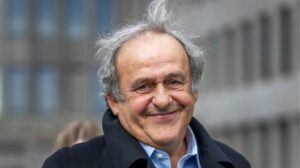
Michel Platini – Quick Facts
| Category | Details |
|—|—|
| Full Name | Michel François Platini |
| Date of Birth | June 21, 1955 |
| Age in 2026 | 71 Years |
| Birthplace | Jœuf, Meurthe-et-Moselle, France |
| Nationality | French |
| Profession | Former Footballer, Manager and Football Administrator |
| Playing Position | Attacking Midfielder |
| Height | Approximately 1.79 m |
| Father | Aldo Platini |
| Mother | Anna Platini |
| Wife | Christèle Bigoni |
| Children | Laurent and Marine |
| Former Clubs | AS Nancy, Saint-Étienne, Juventus |
| France Appearances | 72 |
| France Goals | 41 |
| Career Years | 1972–1987 |
| Ballon d’Or Awards | 3 |
| Major International Trophy | UEFA Euro 1984 |
| UEFA President | 2007–2016 |
Early Life and Childhood
Michel Platini was born on June 21, 1955, in Jœuf, a small town in northeastern France. He grew up in a family with strong connections to football, which played an important role in shaping his interest in the sport.
His father, Aldo Platini, was a football coach and had a significant influence on his early development. Growing up in a football-loving environment allowed Michel to become familiar with the game from a young age.
As a child, Platini developed a passion for football and spent much of his free time playing with friends. He gradually became recognised for his technical ability, creativity and natural understanding of the game.
His early football journey was not always easy. He experienced physical challenges during his youth, but his determination and love for football encouraged him to continue working towards his dream of becoming a professional player.
Platini eventually joined the youth setup of AS Jœuf, where he began developing the skills that would later make him one of France’s greatest footballers.
His father played an important role in encouraging his development and helping him understand the tactical side of football.
Family Background
Michel Platini comes from a family with Italian roots. His grandparents originally came from Italy before settling in France, giving him a cultural background connected to both countries.
His father, Aldo Platini, was particularly influential in his football journey. Aldo understood the game and helped Michel develop his footballing knowledge from an early age.
Michel later married Christèle Bigoni, and the couple have two children, Laurent and Marine.
Although Platini became an internationally recognised sporting personality, he has generally kept much of his family life away from public attention.
His family’s support and his father’s football knowledge were important influences throughout his journey from a young football enthusiast to a global football superstar.
Beginning of His Professional Football Career
Michel Platini’s professional football journey began with AS Nancy-Lorraine.
He joined the club in the early 1970s and gradually established himself as one of its most exciting young attacking talents.
His technical ability, passing vision and ability to score from free kicks quickly attracted attention. Despite his relatively young age, he demonstrated impressive confidence and maturity on the pitch.
During his time at Nancy, Platini developed into an influential attacking midfielder who could create opportunities and contribute goals.
One of the most important achievements of his early career came in 1978, when Nancy won the Coupe de France.
This victory helped establish his reputation in French football and opened the door to greater opportunities.
Platini remained with Nancy until 1979, scoring important goals and developing the qualities that would define his future career.
AS Saint-Étienne: A New Challenge
In 1979, Michel Platini joined AS Saint-Étienne, one of France’s most recognised football clubs at the time.
His move represented an important step forward in his career. At Saint-Étienne, he faced stronger competition and gained valuable experience playing in a team with ambitions of domestic and European success.
Platini continued to demonstrate his creativity, intelligence and goal-scoring ability.
He became an important attacking player and helped the club win the French league championship in 1981.
During this period, his performances attracted interest from major European clubs.
His growing reputation eventually led to a move that would transform his career and make him a global football superstar.
Juventus Career: Becoming a European Superstar
In 1982, Michel Platini joined Juventus, the Italian football giant based in Turin.
The transfer marked the beginning of the most successful period of his playing career.
Moving to Italian football was a major challenge because Serie A was widely recognised for its tactical discipline and strong defensive competition.
However, Platini adapted brilliantly.
At Juventus, he became the creative centre of the team’s attacking system. His ability to deliver precise passes, score free kicks and influence important matches made him one of the most dangerous attacking midfielders in Europe.
He played alongside several outstanding footballers, including Zbigniew Boniek, Paolo Rossi and Gaetano Scirea.
The 1982–83 Season
Platini quickly established himself as an important player at Juventus.
During the 1982–83 season, he became Serie A’s top goalscorer with 16 league goals.
Although Juventus lost the European Cup final against Hamburg, Platini’s individual performances demonstrated that he could compete with the best footballers in the world.
His influence continued to grow, and he soon became one of the most recognisable stars in European football.
The 1983–84 Season
The 1983–84 campaign was another remarkable period for Platini.
He helped Juventus win the Serie A championship and the UEFA Cup Winners’ Cup.
His creative contribution and goal-scoring ability made him a central figure in the team’s success.
He also finished as Serie A’s top scorer for the second consecutive season.
These achievements helped him win the 1984 Ballon d’Or, becoming the best player in European football for the second year in a row.
The 1984–85 Season
The 1984–85 season became one of the most memorable chapters of Platini’s career.
Juventus won the European Cup for the first time in the club’s history after defeating Liverpool in the final in Brussels.
The final was overshadowed by the Heysel Stadium disaster, which resulted in the deaths of 39 people before the match.
Platini scored the winning goal from the penalty spot, helping Juventus secure the trophy.
He also finished as Serie A’s top goalscorer for the third consecutive season and won his third successive Ballon d’Or.
His performances during these three seasons established him as one of the greatest attacking midfielders of all time.
Platini remained at Juventus until 1987 before announcing his retirement from professional football.
France National Team Career
Michel Platini’s international career was one of the greatest achievements of his football journey.
He made his senior debut for France on March 27, 1976, against Czechoslovakia.
His technical ability, creativity and leadership quickly made him an important member of the national team.
Platini eventually became France’s captain and played a central role in transforming the country’s international football reputation.
He represented France in three FIFA World Cups:
– 1978 FIFA World Cup in Argentina.
– 1982 FIFA World Cup in Spain.
– 1986 FIFA World Cup in Mexico.
1982 FIFA World Cup
The 1982 World Cup in Spain was one of the most memorable tournaments of Platini’s international career.
France reached the semi-finals, where they faced West Germany in an extraordinary match.
The game finished 3–3 after extra time, and France eventually lost in a penalty shootout.
Despite the disappointment, Platini’s performances helped establish France as one of the strongest national teams in international football.
UEFA Euro 1984: The Greatest International Achievement
The 1984 UEFA European Championship was arguably the greatest international achievement of Platini’s career.
France hosted the tournament, and Platini captained a talented team that included Alain Giresse, Jean Tigana and Luis Fernández.
He produced an extraordinary individual performance, scoring nine goals in just five matches.
His goals included crucial contributions during the group stage, the semi-final against Portugal and the final against Spain.
France defeated Spain 2–0 in the final at the Parc des Princes in Paris, winning the European Championship for the first time in its history.
Platini finished the tournament as both its top goalscorer and best player.
His nine-goal record in a single European Championship final tournament remains unmatched.
1986 FIFA World Cup
At the 1986 World Cup in Mexico, Platini once again demonstrated his quality on the international stage.
France reached the semi-finals after defeating defending champions Italy and Brazil.
In the quarter-final against Brazil, Platini scored France’s equalising goal in a match that ended 1–1 before France won the penalty shootout.
France eventually finished third after losing to West Germany in the semi-final and defeating Belgium in the third-place match.
Platini retired from international football in 1987 after making 72 appearances and scoring 41 goals for France.
Michel Platini’s Playing Style and Strengths
Michel Platini was not simply a midfielder who passed the ball and created chances. He was a complete attacking footballer who could influence almost every part of an attacking move.
His football intelligence allowed him to identify spaces, understand defensive weaknesses and create opportunities before opponents could react.
Some of his most important qualities included:
**1. Vision and Creativity:** Platini possessed outstanding vision and could deliver precise passes that opened up opposition defences.
**2. Goal-Scoring Ability:** Although he played as an attacking midfielder, he regularly scored goals and finished as Serie A’s top scorer three consecutive times.
**3. Free-Kick Specialist:** He was particularly dangerous from free kicks, using excellent technique and accuracy to score from difficult positions.
**4. Passing Accuracy:** His ability to control possession and deliver accurate passes made him an important playmaker.
**5. Football Intelligence:** Platini understood the tactical side of the game and could read situations quickly.
**6. Leadership:** As captain of France and a key player at Juventus, he demonstrated strong leadership and confidence.
His combination of creativity, technical quality and goal-scoring ability made him one of the defining midfielders of the 1980s.
Ballon d’Or Awards and Individual Achievements
One of the most extraordinary achievements of Michel Platini’s career was winning the Ballon d’Or three consecutive times.
He received the award in:
– 1983
– 1984
– 1985
This remarkable achievement established him among the greatest players in the history of the award.
Other major individual honours included:
– Three consecutive Ballon d’Or awards.
– UEFA Euro 1984 Player of the Tournament.
– UEFA Euro 1984 Golden Boot with nine goals.
– Three consecutive Serie A top-scorer awards from 1983 to 1985.
– European Cup top scorer in 1985.
– Two-time World Soccer Player of the Year.
– FIFA 100 selection in 2004.
– French Footballer of the Century recognition.
His individual achievements reflected his extraordinary influence on European football during the 1980s.
Major Trophies and Career Honours
Michel Platini won several important domestic and international trophies during his playing career.
Club Honours
| Competition | Club | Titles |
|—|—|—:|
| Ligue 1 | AS Saint-Étienne | 1 |
| Ligue 2 | AS Nancy | 1 |
| Coupe de France | AS Nancy | 1 |
| Serie A | Juventus | 2 |
| Coppa Italia | Juventus | 1 |
| UEFA Cup Winners’ Cup | Juventus | 1 |
| UEFA Super Cup | Juventus | 1 |
| European Cup | Juventus | 1 |
| Intercontinental Cup | Juventus | 1 |
International Honours
| Competition | Achievement |
|—|—|
| UEFA European Championship 1984 | Winner |
| FIFA World Cup 1982 | Fourth Place |
| FIFA World Cup 1986 | Third Place |
His trophy collection and individual awards established him as one of the most decorated footballers of his generation.
Coaching Career After Retirement
After retiring as a professional footballer in 1987, Michel Platini decided to continue his involvement in football.
In 1988, he became the head coach of the French national team.
His appointment represented a new challenge because he had to move from being a world-class player to managing an entire national squad.
France participated in the qualifying campaign for the 1990 World Cup but failed to qualify for the tournament.
Platini later guided France through the qualification process for Euro 1992.
However, France was eliminated in the group stage after failing to win any of its three matches.
He left his position as national team coach in 1992.
Although his coaching career was relatively short, it provided him with valuable experience that later helped him move into football administration.
Michel Platini as UEFA President
After his playing and coaching careers, Platini became increasingly involved in football administration.
He served in several football-related roles and gradually became one of the most influential figures in European football governance.
On January 26, 2007, he was elected UEFA President.
His election marked the beginning of a new chapter in his career.
He was re-elected in 2011 and again in 2015, serving as UEFA President until September 2016.
During his presidency, Platini promoted several important initiatives, including Financial Fair Play regulations, designed to encourage clubs to manage their finances more responsibly.
He also supported the development of grassroots football, youth competitions and the wider European football structure.
One of his major initiatives was the expansion of the UEFA European Championship from 16 to 24 teams, which took effect at Euro 2016.
His presidency had a significant impact on the development and organisation of European football.
FIFA Controversy and Legal Case
One of the most difficult periods in Michel Platini’s life came in 2015, when a controversial payment from FIFA became the subject of a major investigation.
The case involved a payment of two million Swiss francs made to Platini in 2011 by FIFA under then-president Sepp Blatter.
Both men stated that the payment was for consultancy work Platini had performed between 1998 and 2002.
However, the payment raised questions about FIFA’s financial and governance procedures.
Platini was suspended from football-related activities, and his plans to become FIFA President were affected.
The legal proceedings continued for several years.
In July 2022, a Swiss criminal court acquitted Platini and Blatter. A second trial followed, and in March 2025, a Swiss appeals court acquitted both men again.
The acquittal became final in September 2025 after prosecutors decided not to pursue another appeal.
In June 2026, Platini filed criminal and civil legal proceedings in France against FIFA and its president, Gianni Infantino, relating to the events that had affected his 2015 FIFA presidential ambitions.
FIFA has denied wrongdoing.
These developments became an important part of Platini’s post-playing story, although his football achievements remain a separate and significant part of his legacy.
Michel Platini’s Life in 2026
As of 2026, Michel Platini is 71 years old and remains a well-known figure in international football history.
Although he is no longer serving as UEFA President or working as a professional football manager, his opinions and experiences continue to attract attention from football supporters and media organisations.
He has spoken publicly about football governance, the direction of modern football and the importance of protecting the sport’s traditions.
His career illustrates two very different sides of football: extraordinary success on the pitch and the complicated responsibilities that come with leadership in international sports administration.
In 2026, he remains remembered primarily for his achievements with Juventus and France, particularly his three consecutive Ballon d’Or victories and his outstanding performance at Euro 1984.
Personal Life and Interests
Michel Platini has generally maintained a relatively private personal life despite his worldwide fame.
He is married to Christèle Bigoni, and they have two children, Laurent and Marine.
His family has supported him throughout different stages of his career, including his time as a professional footballer, national team coach and UEFA President.
Platini is also known for his strong connection to French and Italian football culture.
His family background, early experiences in Jœuf and professional journey in France and Italy helped shape his identity as one of the most recognised figures in European sport.
Michel Platini’s Legacy in World Football
Michel Platini’s influence on football extends far beyond his trophies and individual awards.
He helped redefine the attacking midfielder’s role during the 1980s by combining creative passing, intelligent movement and exceptional goal-scoring ability.
His three consecutive Ballon d’Or victories remain one of the most remarkable achievements in football history.
For Juventus supporters, he represents one of the greatest players ever to wear the club’s shirt. For French football fans, he will always be remembered as the captain who led the national team to its first European Championship in 1984.
His nine goals at that tournament remain a record for a single edition of the European Championship final tournament.
Even though his later career in football administration became controversial, his achievements as a player continue to receive widespread recognition.
Platini’s story is an important reminder that football history is shaped not only by the players who score goals but also by those who change the way the game is played.
Frequently Asked Questions (FAQs)
1. Who is Michel Platini?
Michel Platini is a French football legend, former attacking midfielder and former UEFA President. He is widely recognised as one of the greatest midfielders in football history.
2. How old is Michel Platini in 2026?
Michel Platini was born on June 21, 1955. He is 71 years old in 2026.
3. How many Ballon d’Or awards did Michel Platini win?
He won three consecutive Ballon d’Or awards in 1983, 1984 and 1985.
4. Which clubs did Michel Platini play for?
He played for AS Nancy-Lorraine, AS Saint-Étienne and Juventus during his professional career.
5. How many goals did Michel Platini score for France?
He scored 41 goals in 72 appearances for the French national team.
6. Did Michel Platini win the FIFA World Cup?
No. France finished fourth in 1982 and third in 1986 during the World Cups in which he participated.
7. How many goals did Michel Platini score at Euro 1984?
He scored nine goals in five matches, helping France win the tournament.
8. When did Michel Platini become UEFA President?
He was elected UEFA President on January 26, 2007, and remained in the position until September 2016.
9. Why did Michel Platini leave UEFA?
His presidency ended following the FIFA payment controversy and the football-related suspension imposed on him in 2015.
10. Was Michel Platini acquitted in the FIFA payment case?
Yes. He was acquitted in 2022 and again in 2025. The second acquittal became final in September 2025.
11. What is Michel Platini doing in 2026?
He is no longer serving as UEFA President or holding a major football governing position. In June 2026, he initiated new legal proceedings in France against FIFA and its president over the events surrounding his former FIFA presidential ambitions.
Conclusion
Michel Platini’s life story is one of extraordinary football talent, ambition, leadership and historical achievement.
From his childhood in Jœuf to becoming one of the greatest midfielders in European football, he built an exceptional career through creativity, intelligence and determination.
His success with AS Nancy, AS Saint-Étienne and Juventus demonstrated his ability to perform at the highest level, while his leadership of France at Euro 1984 established him as a national sporting icon.
Winning three consecutive Ballon d’Or awards, lifting the European Cup with Juventus and scoring nine goals at Euro 1984 secured his place among football’s all-time greats.
His later journey into coaching and football administration added another dimension to his career, making him one of the most recognisable figures in the history of European football.
Although his administrative career faced serious challenges, his achievements on the football pitch remain extraordinary.
Michel Platini will always be remembered as a player who combined elegance, creativity and goalscoring ability to leave a lasting mark on the beautiful game.
Discover the inspiring lives, remarkable careers, achievements, and personal journeys of more iconic stars. Read Full Biography